


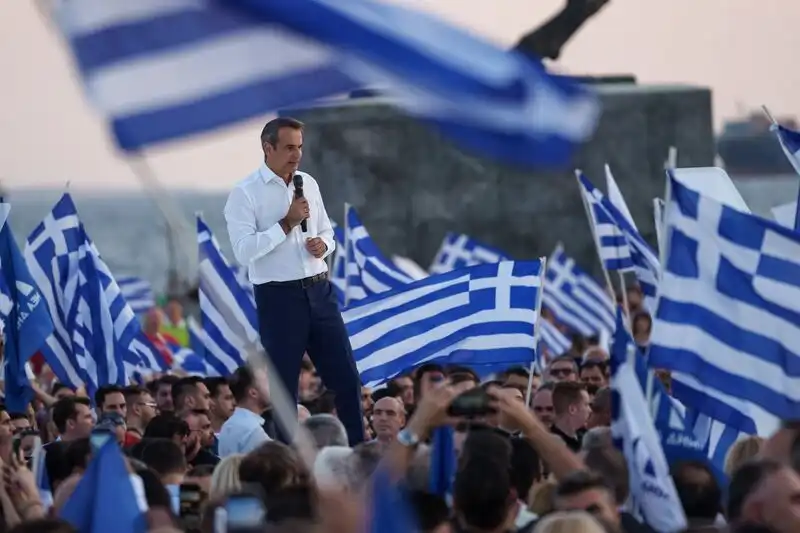


Greece is preparing for a second election, which is set to take place on June 25th, after the recent vote on May 21st failed to provide a majority government. The Conservative party led by Prime Minister Kyriakos Mitsotakis won the May election with 40.8% of the vote but couldn't secure a majority. The upcoming election offers new hope for Mitsotakis to secure a one-party government since the country will be voting under a new electoral system which offers a significant advantage to the first-place finisher.
Despite the PM's desperate calls to rule alone in May rather than forming a coalition, he refused to cross his ideological boundaries, preferring to repeat the election instead. Mitsotakis' robust victory in last month's election boosted the markets' confidence in Greece's economic recovery and the country's return to investment-grade status. The country's debt crisis has lowered the baseline, but the Greek economy is still expanding faster than many other European nations. The investment community sees growth potential for years to come and is eagerly waiting for a stable government to continue the fiscal policies that were in place before the pandemic.
The upcoming election is pivotal because the continued economic recovery of Greece and its progress towards investment-grade status is on the line. The May election was credit-positive for Greece, and Moody's Investors Service predicts investment-grade status if Mitsotakis repeats the commanding performance he had on May 21st. The new electoral system could work in Mitsotakis' favor, as it all but guarantees a single-party government if the first-place finisher can attain at least 38% of the vote. However, voter apathy and smaller parties on the cusp of attaining the required threshold are factors to be considered.
If a single-party government isn't possible, then the country may head towards coalition government. Mitsotakis would likely need to form a partnership with the socialist Pasok party leader Nikos Androulakis, who placed third in the previous election, but relations between the two aren't on the best terms. The Pasok leader has stated that he won't be joining a government with Mitsotakis as the prime minister, which creates a deadlock. Mitsotakis would then have to look for synergies with smaller parties in the Parliament, as a third election would be doomsday for Greece and its future progress.