


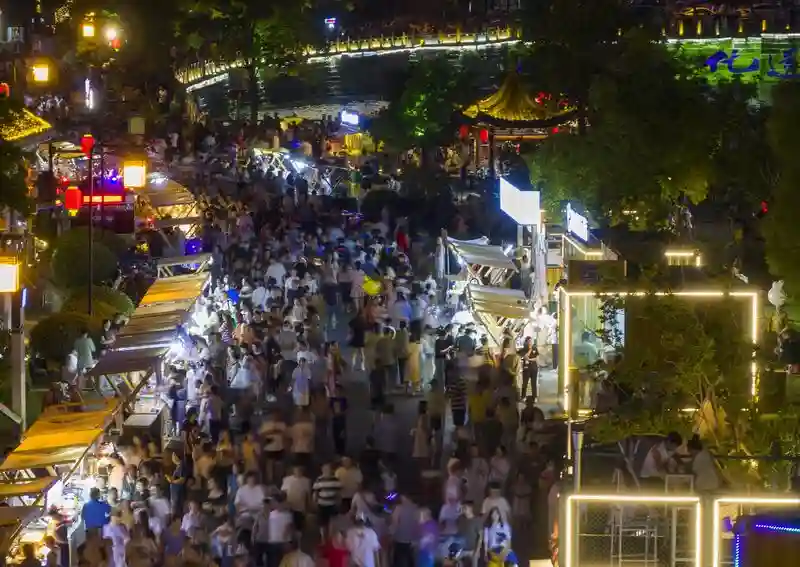


China's travel spending during the recent Dragon Boat Festival holiday has fallen below pre-Covid levels, indicating a slowdown in consumption. According to a statement from the Ministry of Culture and Tourism, domestic tourism revenue during the period reached 37.3 billion yuan ($5.2 billion), which is only 94.9% of the amount recorded in 2019 before the pandemic. Despite this, there were 106 million domestic tourism trips made, which was higher than the same period in 2019 by 12.8%.
The Chinese economy has shown mounting evidence of a slowdown in recent weeks, with several investment banks downgrading their growth forecasts, although most still expect Beijing to reach its relatively conservative target of around 5% for the year. The policymakers in China are also facing increasing calls for economic stimulus.
The Communist Party's No. 4 official, Wang Huning, said at a meeting earlier this month that consumption was key to achieving China's economic growth target. However, during the Labor Day holidays in May, tourism spending was 148 billion yuan, only 0.7% higher than the pre-pandemic level. The number of domestic trips made during the five-day break reached 274 million, up 19% from the pre-pandemic level in 2019.
The recent data suggests that the post-Covid recovery momentum for in-person services is dwindling, especially when compared to the Labor Day holiday. As pent-up demand fades and the risk of an economic double-dip becomes more apparent in the coming months, it is expected that in-person service consumption growth will weaken even further, according to Nomura economist Lu Ting.