


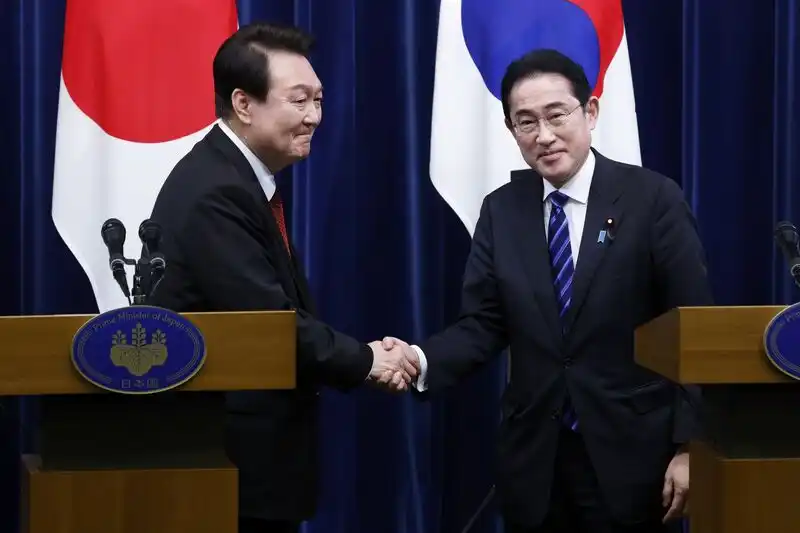


Japan has decided to reinstate South Korea as one of its preferred trade partners, marking the latest in a series of efforts by both nations to strengthen cooperation with the United States. According to Japanese Trade Minister Yasutoshi Nishimura, the restored status will take effect on July 21, and is expected to smoothen out export procedures to South Korea, which includes the easing of licensing requirements on key semiconductor materials such as hydrogen fluoride, fluorinated polyimide, and photoresists, which are all essential components of displays and semiconductors.
The move follows a similar decision made by Seoul to restore Japan's so-called white list of trading partners a few months ago. Additionally, Japanese and South Korean leaders have taken several steps to address the issues related to Japan's colonial rule over the Korean Peninsula this year. The aim is to build up the necessary collaboration together with the U.S. in dealing with challenges posed by North Korea and China.
Nishimura also stated, "We also agreed upon a follow-up framework to continue dialogue over policy and take appropriate action including reviewing measures and operations as needed." It indicates the commitment of both nations to maintain open communication and to address issues as they arise.
The trilateral summit with U.S. President Joe Biden is already in the works as the two countries prepare for the meeting. According to the Yomiuri newspaper, the meeting could take place as early as late August. The restoration of the trading partnership will further fuel the discussions, as both nations will look to deepen their cooperation further on related bilateral and multilateral issues.
According to South Korea's Ministry of Trade, bilateral trust in the field of export control has been fully restored following in-depth policy discussions. It also vowed to cooperate with Japan concerning relevant issues and joint efforts to restore economic ties.
Both countries are major players in the chip industry, and the current tension and rapid changes in the global environment have brought into focus the necessity of safeguarding and strengthening supply chains from a national security standpoint. Japan's limit on exports of chipmaking gear is in line with the US's efforts to reduce China's access to advanced know-how. Meanwhile, Yoon has been making significant strides to reconcile strained relations between the two countries since his predecessor's tenure. Yoon said that compensation for Koreans conscripted to work at Japanese mines and factories would be sought from South Korean firms rather than from Japan's companies through legal channels.
During the Hiroshima G7 summit in March, South Korean President Yoon was invited to meet with Kishida in Tokyo, becoming the first such meeting in 12 years. At the same time, the two leaders paid their respects by showing their unity at a memorial to Koreans who perished in the 1945 nuclear attack.