


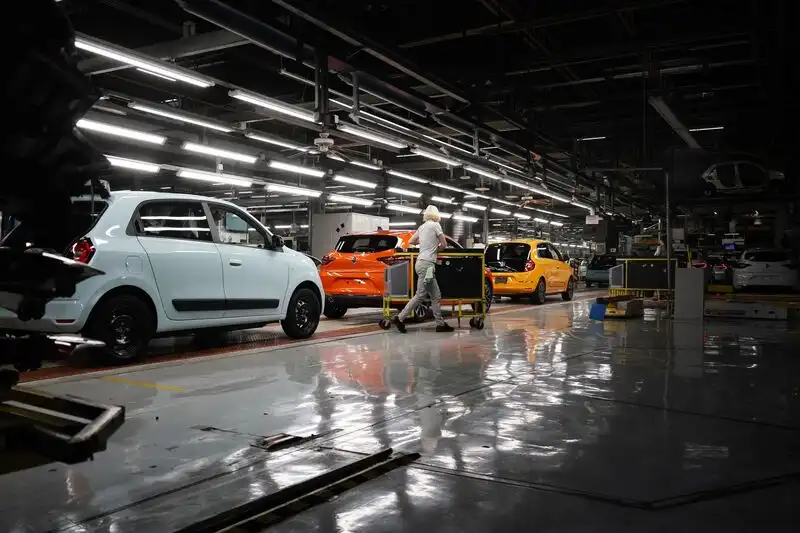


Renault SA Chairman, Jean-Dominique Senard, has raised an alarm about the potential risk of China cutting off raw material supplies, something that keeps him awake at night. Senard believes that Europe has not yet fully realized the implications of such a situation and has failed to assess the impact of its dependence on Chinese metals. Speaking at a conference in Aix-en-Provence, Senard referred to China's recent decision to impose restrictions on the exports of gallium and germanium - two metals crucial to industries such as semiconductors, telecommunications, and electric vehicles.
China, which is actively seeking technological dominance in various sectors including quantum computing, artificial intelligence, and chip manufacturing, cites national security concerns as the motive for its latest export restrictions. Senard warns that if Europe does not act swiftly in response to these developments, it could find itself in an "insane situation overnight" due to its unpreparedness for such a scenario. He further emphasizes that China's control over mines and the transformation of metals used in battery production is particularly worrying, as the future battleground could revolve around access to crucial metals.
China currently dominates the global production of gallium and germanium, accounting for 94% of the world's gallium production alone, according to the UK Critical Minerals Intelligence Centre. These export limits come at a time when nations globally are striving to reduce their reliance on overseas supply chains. Governments and industries are increasingly working towards establishing self-sufficiency and secure domestic sources for critical materials, particularly in key sectors like technology and electric mobility.
Renault's chairman's concerns reflect the broader worries in the global community about the risks associated with over-dependence on a single country for critical raw materials. The need to diversify supply chains and strengthen domestic resource capabilities has become even more urgent in light of the geopolitical tensions and trade disputes that have emerged in recent years.
Efforts are underway in many countries, including Europe, to develop strategies to reduce reliance on Chinese imports and secure alternative sources of vital materials. The aims include supporting local mining projects, establishing recycling programs, and exploring new technologies for material extraction. Governments and businesses are recognizing the importance of securing supply chains to safeguard their economic interests and national security.
The wake-up call from Renault's chairman highlights the need for proactive measures and collaboration among nations to mitigate the risks associated with raw material dependencies. As the world continues to compete and navigate a highly interconnected global economy, the availability and accessibility of critical metals and minerals will undoubtedly play a crucial role in determining future economic and technological success.