


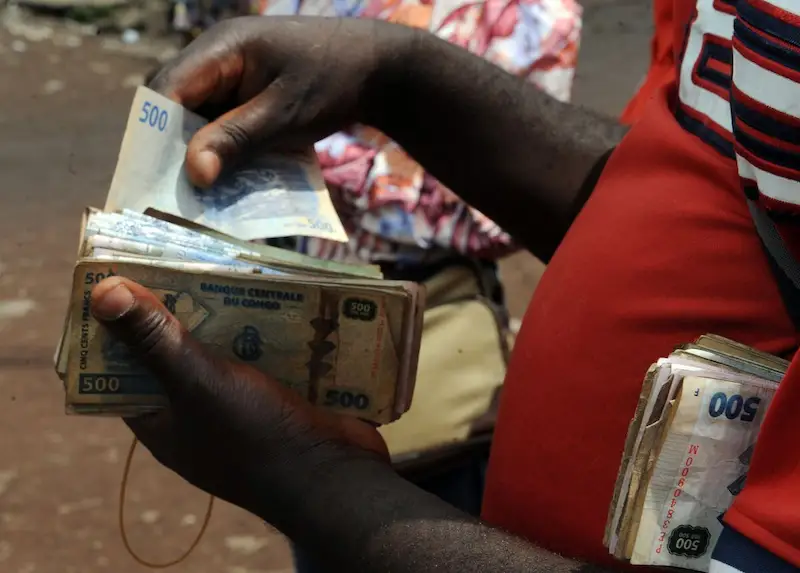


The Democratic Republic of Congo's government is implementing measures to address the depreciation of its currency, the Congolese franc. Finance Minister Nicolas Kazadi announced a reduction in cash expenditure and an emphasis on tax payments in francs rather than US dollars. The Congolese franc has experienced a significant decline, losing over 23% of its value against the dollar since the beginning of the year.
The depreciation of the franc is attributed to several factors, including government spending on conflicts in eastern Congo and the upcoming elections in December. These, combined with lower-than-expected revenues, have put pressure on the currency. Despite recent interventions by the central bank, such as interest rate hikes and increased franc reserve requirements for commercial banks, the depreciation has continued.
To combat this situation, Kazadi stated that the enforcement of a limitation on cash transactions over $10,000 would curtail the practice of making large government payments in cash through the central bank. This practice has flooded the market with francs that were quickly converted to dollars, exacerbating the currency depreciation.
The International Monetary Fund (IMF) has raised concerns about the significant cash transactions conducted by the central bank, which amounted to approximately $1 billion in 2022. The IMF has recommended reducing these transactions to comply with Congolese law and global anti-money laundering recommendations.
As the government continues its pre-election spending, Kazadi assured that dollar and franc payments would be balanced to avoid destabilizing the currency market. Approximately $380 million out of the $680 million budgeted for the elections has been disbursed thus far.
In the long term, structural changes are needed to strengthen the Congolese franc. Kazadi emphasized the importance of increasing the number of Congolese with bank accounts through mobile technology and facilitating payments in francs. Furthermore, the country must focus on expanding its domestic industries, ranging from agriculture to insurance, to promote local production and retain money within the nation's banks.
Building trust in the national currency is crucial, as Kazadi highlighted. The Congolese people need to have faith in their own currency, and this can be achieved through sustainable economic measures and promoting financial stability. By implementing these strategies, the government hopes to address the depreciation of the Congolese franc and stabilize the currency in the long run.