


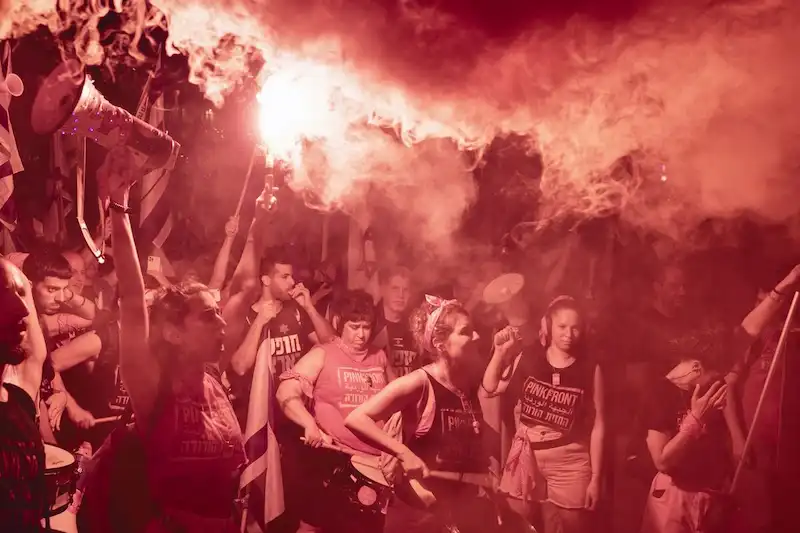


Israel's largest anti-government protest movement continues to gain momentum as hundreds of thousands of activists take to the streets to challenge the populist policies of Prime Minister Benjamin Netanyahu. What sets this movement apart is that it is led by established members of Israeli society, including CEOs, military veterans, and high-ranking professionals. These individuals have formed a united front, utilizing their expertise and resources to organize a widespread and effective resistance.
With an estimated 270 active groups and around 800,000 individuals involved, the movement has deployed various tactics to amplify their message. They have employed photography drones to capture images of the protests, conducted late-night operations to wrap monuments with banners displaying their slogans, and even enlisted women dressed as characters from the iconic novel "The Handmaid's Tale" to participate in demonstrations.
Their efforts have yielded results, as the government's plans to weaken the power of the courts have been slowed down. However, with the potential passage of key changes still looming, the movement is strategizing their next steps to counter these actions. The proposed reforms have not only sparked concern among the Israeli population but have also garnered criticism from global investors and international partners.
The movement's largest grassroots organization, known as the "Kaplan Force," has emerged as a prominent figure in these protests. Led by Shikma Bressler, a physicist who previously led anti-corruption protests against Netanyahu, the group has a well-established infrastructure for mobilizing people to participate.
Beyond the Kaplan Force, there are 140 sectoral or professional groups encompassing a diverse range of backgrounds, including military reservists, high-tech executives, women's rights activists, doctors, and lawyers. Despite operating independently with their own goals and WhatsApp groups, these groups recognized the need for collaboration and funding, leading to the establishment of protest headquarters.
The oversight group responsible for coordinating these efforts is named "Hofshi b'artzenu" or "Free in our country." It is led by a team of 16 individuals, including former military chiefs of staff, top lawyers, and business leaders. Their role is to provide strategic planning, legal assistance, and funding allocations to the various organizations involved in the movement. The operation is primarily funded by private donors and crowd sourcing, with 90% of donations coming from within Israel.
One crucial component of the protests is the participation of elite military reservists. Last spring, the threat of combat-pilot reservists refusing to volunteer played a significant role in halting the government's proposed judicial overhaul. Now, as another controversial law heads toward final passage, reservists are once again vowing to get involved, highlighting their commitment to the cause and the potential security risks associated with the proposed changes.
The movement's determination to challenge the government's actions remains strong, even as they face uncertainty about what lies ahead. If the current bill is passed, attention will shift towards potential further reforms, including changes to the selection process for judges. The activists are prepared to adapt their protests accordingly, demonstrating their resolve to protect the integrity of the Israeli judiciary system.
The anti-government protest movement in Israel represents a unique convergence of established members of society who have united against populist policies. Their collective efforts have resonated with hundreds of thousands of Israelis, signaling a widespread dissatisfaction with the government's proposed reforms. As they continue to mobilize and utilize their resources, these activists are determined to defend Israel's democratic values and ensure a just and independent judiciary system.