


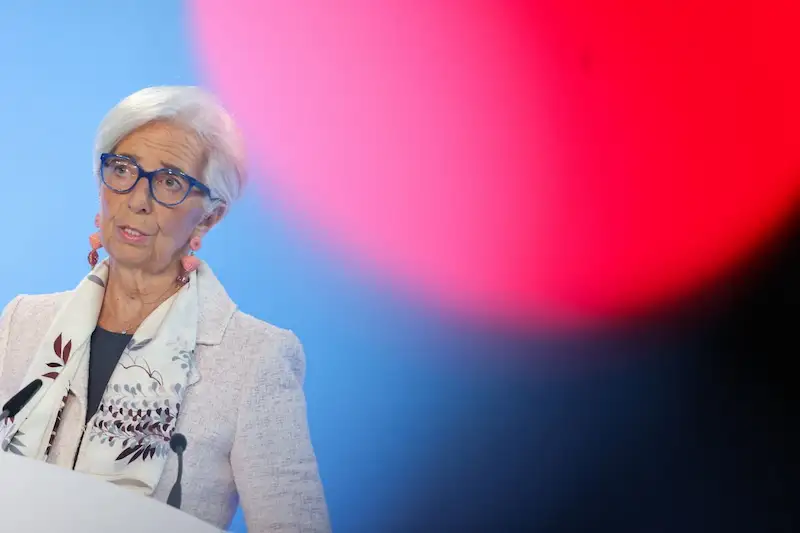


A senior senator from Prime Minister Giorgia Meloni's ruling coalition has called for Christine Lagarde, the head of the European Central Bank (ECB), to be dismissed from her position. Maurizio Gasparri, a lawmaker from the center-right Forza Italia party, made the statement on Twitter. While Gasparri's comment does not reflect official government policy, he holds significant influence within Italy's political establishment, having previously served as communications minister under Silvio Berlusconi's premiership.
Gasparri's call comes as several Italian government figures have been criticizing the ECB's tighter monetary policy. Lagarde recently offered a downbeat assessment of the economic outlook, describing it as "deteriorated." In addition, she announced a ninth consecutive interest-rate increase and suggested that the Governing Council is open to another potential hike in September.
Italian Foreign Minister Antonio Tajani, who also heads Forza Italia, expressed concerns about further increases in borrowing costs within the eurozone. He emphasized that such a move would be an error, potentially leading to an economic slump and posing a threat to companies and households. Tajani, who is also a deputy prime minister and a member of the governing coalition, joins other government officials in criticizing the ECB's tightening measures.
The tensions between the Italian government and the ECB highlight the ongoing debate over monetary policy in the Eurozone. While some argue that a tighter monetary stance is necessary to curb inflationary pressures and maintain economic stability, others, like Gasparri and Tajani, believe that such policies are damaging and can push the country closer to a recession.
It remains to be seen how these criticisms will impact the ECB's decision-making process and whether there will be any changes in its monetary policies moving forward. However, the growing discontent within Italy's government raises questions about the effectiveness and suitability of the current measures implemented by the ECB under Lagarde's leadership.