


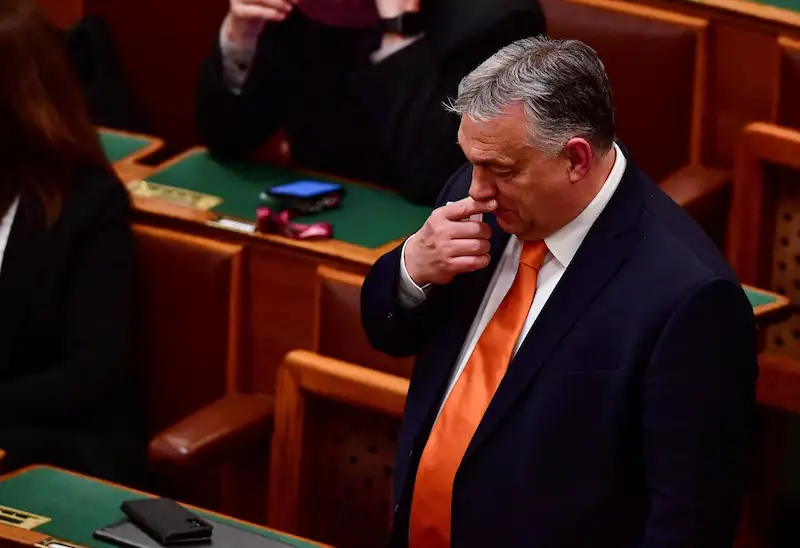


In a surprising turn of events, Hungarian Prime Minister Viktor Orban's lawmakers chose to boycott an extraordinary meeting of parliament that had been called to ratify Sweden's accession to NATO. The legislative session, scheduled for Monday, was abruptly adjourned as ruling party members, who hold a two-thirds majority in the chamber, conspicuously failed to show up for the gathering. Although Hungary and Turkey are the only two NATO members that have yet to ratify Sweden's inclusion in the military alliance, it seems that Hungary has chosen to delay the approval process until Turkey does so first.
The move by Orban's government to boycott the meeting raises questions about the reasons behind Hungary's decision. While Turkey recently lifted its objections and approved Sweden's NATO bid after receiving assurances that Sweden would take action against Kurdish separatist groups, Hungary has made it clear that it will only ratify Sweden's membership once Turkey does. However, the Hungarian government has not provided any specific explanation as to why it has chosen to tie its timetable to Ankara's.
It is worth noting that Sweden's bid to join NATO stems from security concerns following Russia's invasion of Ukraine last year. The country has sought the protection and support of the military alliance to ensure its national security in the face of potential threats. With all other NATO members having ratified Sweden's inclusion, Hungary's delay in approving the bid raises speculation about the motivations behind this decision.
Adding intrigue to the situation is the strained relationship between Hungary and Sweden. Orban's government has frequently criticized and clashed with Sweden over its criticisms of Hungary's handling of democratic principles and the rule of law. It is unclear if this animosity has influenced Hungary's stance on ratifying Sweden's NATO membership.
Despite the setback, there is still hope that Hungary will ultimately approve Sweden's inclusion in NATO. Cabinet Minister Gergely Gulyas indicated that parliament may consider ratifying the bid in the autumn. However, the recent boycott of the legislative session raises doubts about the country's intentions and its commitment to the alliance.
The situation regarding Sweden's NATO membership also highlights the complexities and challenges of diplomatic relations within the military alliance. While NATO strives for unity and collective defense, member states may have their own individual concerns and political considerations that come into play during the decision-making process. As this situation continues to unfold, it remains to be seen how Hungary's actions will impact its relationship with Sweden and the broader dynamics within NATO.