


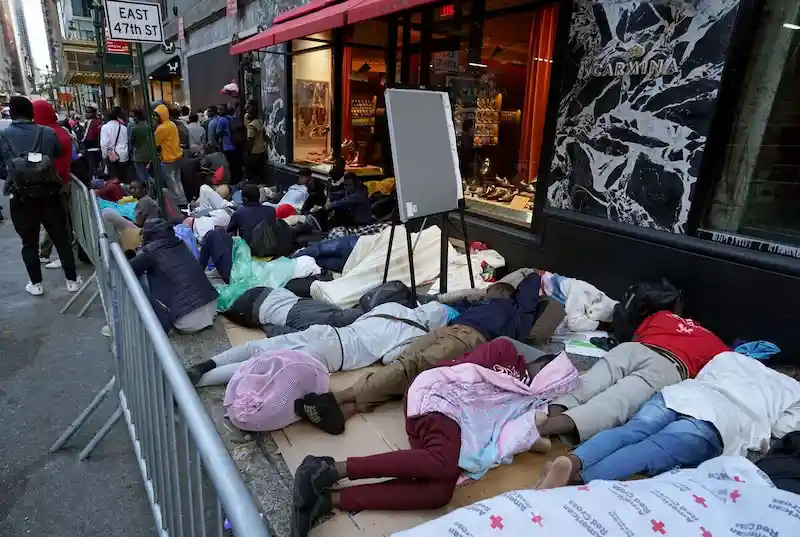


New York City is facing a migrant crisis that is straining its resources, prompting the opening of a new relief center on Randall's Island. Mayor Eric Adams announced that the center will be able to accommodate up to 2,000 adults seeking asylum, with the state committing to reimbursing the associated costs. This initiative is part of a larger plan, as two more relief centers are scheduled to open in the coming weeks.
The escalating number of asylum seekers, which grows by hundreds every day, has stretched the city's system to its limits, according to Mayor Adams. Currently, the city is providing shelter to approximately 57,200 migrants, as mandated by a court order. However, the strain is overwhelming the city's shelter system, prompting calls for alternative solutions.
To address the situation, officials are evaluating around 3,000 potential sites to house migrants, including prominent locations such as Manhattan's Central Park and Brooklyn's Prospect Park. In response to the crisis, the city has already opened over 190 emergency shelters in various city-owned buildings, hotels, hospitals, and temporary facilities like the one on Randall's Island that operated last year. Additionally, plans are underway to convert an abandoned psychiatric care facility in Queens into a humanitarian relief center for migrants.
The city estimates that the cost of caring for migrants will exceed $4.3 billion by next July. With the system reaching its breaking point, Zach Iscol, New York's Emergency Management Commissioner, emphasizes the need for a cohesive, national response to this pressing issue. He asserts that this is not solely a local problem but a national one that requires leadership and support from the broader government.
As New York City grapples with the influx of migrants seeking asylum, the opening of the Randall's Island relief center highlights the desperate need for immediate action. It serves as a temporary solution to provide shelter for vulnerable individuals while city officials continue to search for more suitable accommodations. The long-term challenge, however, lies in developing a robust and comprehensive national approach to address the ongoing migrant crisis.