


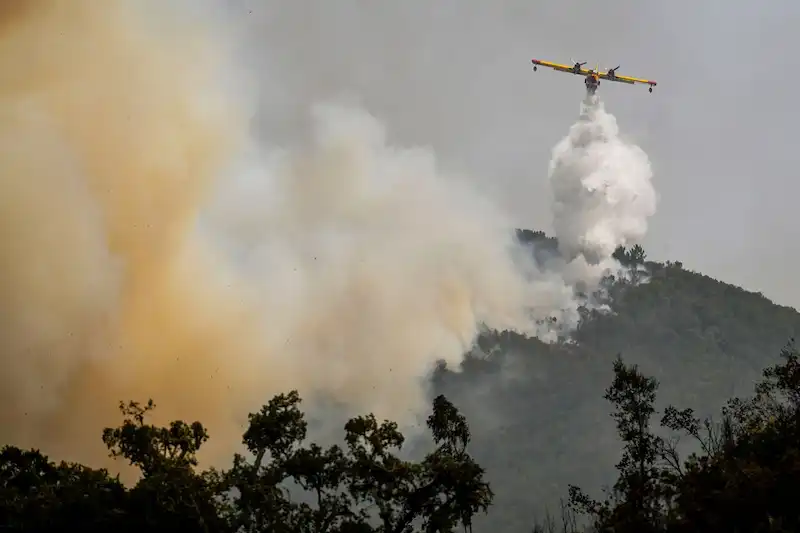


Portugal is facing an intense battle against wildfires as the country grapples with scorching temperatures and severe storms sweep across Europe. Over 1,000 firefighters are working tirelessly to contain a blaze in the south of Portugal, which has ravaged approximately 10,000 hectares of land, destroyed homes and a hotel, and forced the evacuation of over 1,400 people. Fortunately, cooler weather has aided the firefighting efforts in the town of Odemira, bringing some relief.
While the situation in Odemira is gradually improving, the north of Portugal remains on high alert as temperatures reached a scorching 44.4°C (111.9°F) in Braganca. In Greece, 47 fires have been successfully brought under control in the last 24 hours, although eight regions are still on high alert due to strong winds that increase the risk factor. Recently, authorities ordered the evacuation of two areas near Marathona, east of Athens, due to a rapidly spreading wildfire.
Spain, too, is facing extreme weather conditions as the country experiences red weather warnings in several regions, including Andalucia and Madrid, where temperatures are expected to soar to 44°C (111°F). These record-breaking temperatures are a direct consequence of the planet's hottest month on record in July, which has caused alarming consequences across the globe. The Antarctic is witnessing unprecedented melting rates, wildfires in Canada have burned an area approximately the size of Iceland, and numerous tourists in Greece had to evacuate the island of Rhodes due to wildfires.
Scientists assert that the occurrence of these extreme weather events, which are wreaking havoc in the Northern Hemisphere, would have been "virtually impossible" without the influence of climate change. Despite this clear evidence, efforts to address the issue by reducing the use of fossil fuels fall considerably short of what is required to combat the rapidly warming planet.
While southern Europe grapples with scorching heat, northern Europe is facing its own weather-related challenges. Sweden is currently dealing with red flood warnings, but the most destructive impact has been observed in Norway. Heavy rainfall has triggered landslides and road closures in the worst-hit areas, leading to the evacuation of more than a thousand people. At the same time, the far north of Norway is experiencing dry and unseasonably warm weather, raising concerns about an increased risk of wildfires.
Meanwhile, the effects of the severe storms are also felt in other parts of Europe. Cyclone Circe is battering northern France, with winds reaching speeds of 100 kilometers (62 miles) per hour in Saint-Malo. In Germany, gales are forecasted for the island of Sylt and other areas along the north coast, exacerbating the tumultuous weather conditions across the continent.