


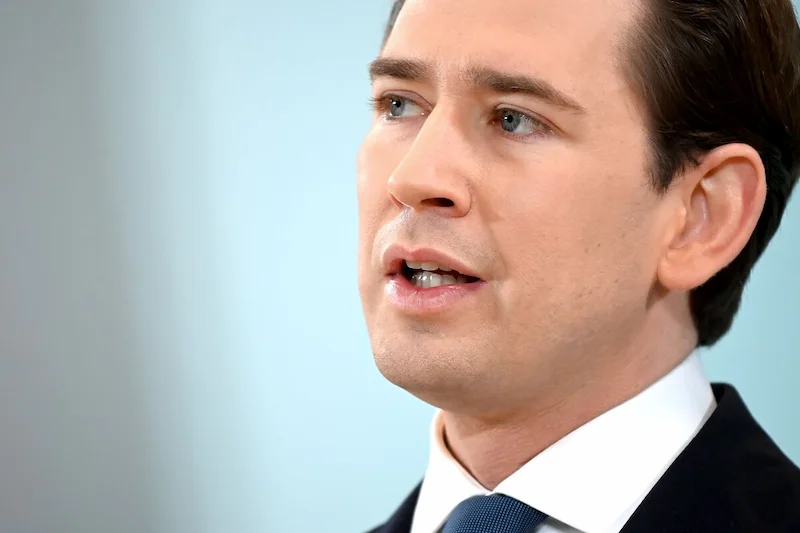


Sebastian Kurz, the former Chancellor of Austria, has been formally charged with providing false testimony to a parliamentary committee investigating government corruption. This development comes as a blow to Kurz, who could potentially face up to three years in jail if found guilty, according to white-collar investigators at Austria's Justice Ministry.
The charges against Kurz stem from his statements made in relation to the appointment of executives to the state holding company OeBAG. Prosecutors had launched an investigation into the former Chancellor's parliamentary remarks while he was still in office. Kurz, who resigned from his position as the leader of Austria's ruling center-right People's Party in 2021, is currently facing separate accusations that he misused taxpayer money to influence public opinion polls.
In response to the charges, Kurz asserted his innocence, stating that the allegations are false and expressing his hope that the truth will prevail in court. It remains to be seen how the legal proceedings will unfold and whether Kurz will be able to clear his name.
The indictment of Kurz is part of a wider corruption scandal that has rocked Austria in recent years. The scandal was initially ignited by a leaked video that showed former far-right leader Heinz-Christian Strache discussing party financing in the Spanish resort of Ibiza. Since then, the investigation has unveiled various instances of corruption and misconduct in Austrian politics.
Austrian Chancellor Karl Nehammer addressed the media, emphasizing that Kurz's indictment should serve as an opportunity for those involved to present their side of the story and potentially exonerate themselves. The case has attracted significant attention, given Kurz's prominent role in Austrian politics and his subsequent career as a global strategist for tech-investor Thiel Capital.
As the legal process moves forward, all eyes will be on the outcome of the trial and its implications for the former Chancellor and the broader political landscape in Austria. The charges against Kurz underscore the importance of accountability and transparency in government, highlighting the need for strong ethical standards to prevent corruption and maintain public trust.