


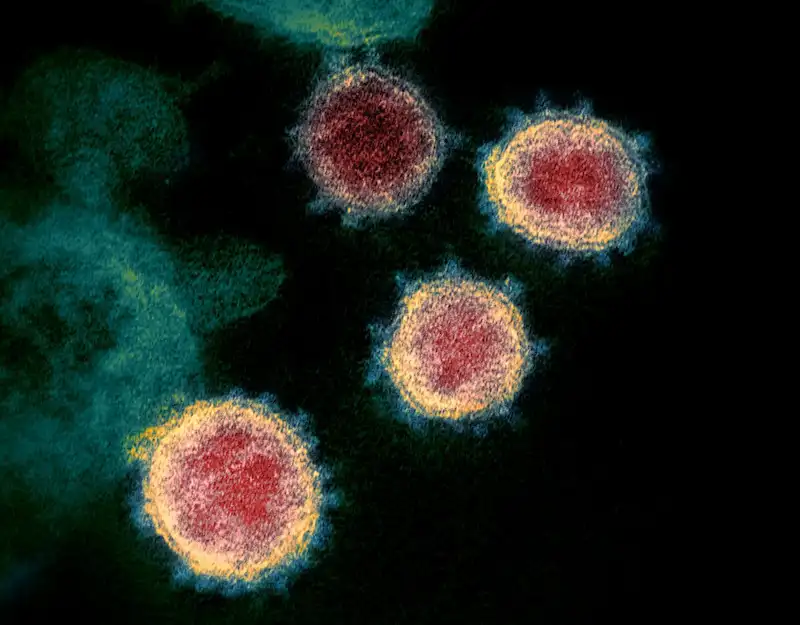


A new Covid-19 lineage, known as BA.2.86, is causing concern among global health officials due to its significant number of mutations, which could potentially make it more challenging to prevent and treat. Although only a few cases have been reported in countries like the US, Denmark, and Israel, the mutations present in this variant have caught the attention of the World Health Organization (WHO) and the US Centers for Disease Control and Prevention (CDC).
Given that Covid-19 has been continuously mutating since its initial emergence on the global stage over three years ago, the identification of new variants has become a regular occurrence. Just recently, the WHO issued a warning regarding another variant called "Eris," which is spreading rapidly worldwide. However, both Moderna Inc. and Pfizer Inc. announced that their updated Covid vaccines have demonstrated effectiveness against the Eris variant in early studies.
According to Kristian Andersen, an immunologist and microbiologist at Scripps Research, BA.2.86 possesses "all the hallmark features of something that could take off." This statement highlights the potential of this variant to become more prevalent and pose a greater threat. The lineage seems to be derived from the BA.2 variant, which emerged in early 2022. However, BA.2.86 exhibits over 30 mutations on its spike protein, which is crucial for the virus to attach itself to cells and is the target of the vaccines developed by Moderna and Pfizer.
Though there is still limited information available about BA.2.86, its significant number of mutations raises concerns about its potential impact on public health. Further investigation and monitoring by health authorities are necessary to fully understand the characteristics and potential risks associated with this variant. Efforts to track and study these mutations are crucial in ensuring that vaccine development and public health measures remain effective against emerging Covid variants.