


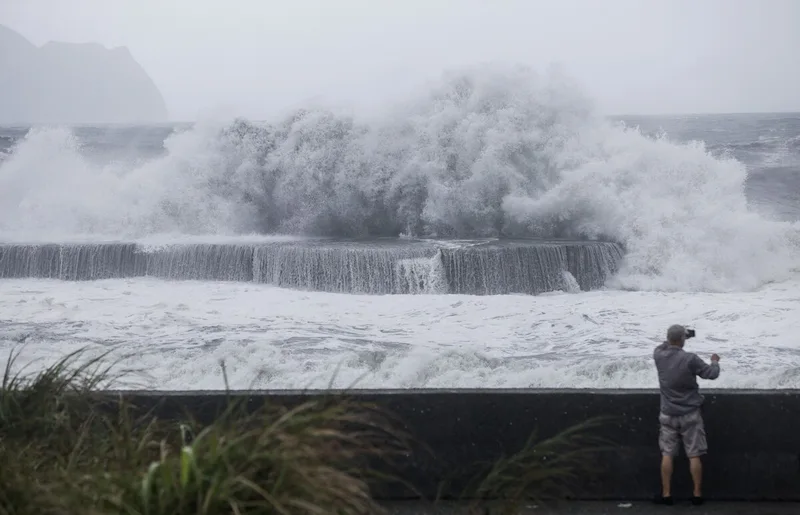


Taiwan was on high alert as Typhoon Haikui made landfall on the island, marking the first direct hit by a tropical cyclone in four years. The typhoon's eye was over eastern Taitung at around 3:40 p.m., bringing heavy rain and strong winds to the region and causing power outages for over 40,000 households.
In anticipation of the typhoon's arrival, authorities had already taken precautionary measures, including the closure of offices and schools, and the cancellation of more than 200 flights. President Tsai Ing-wen urged the public not to underestimate the storm's severity, recognizing it as a menacing threat that required utmost caution.
This marked the first time since 2019 that a tropical cyclone directly hit Taiwan. The last one was Typhoon Bailu, which struck the region in August of that year. As a result, local authorities in eastern and southern Taiwan counties, including Taitung, Kaohsiung, and Pingtung, ordered businesses and schools to close for the safety of their residents.
The impact of the typhoon was felt across the transportation sector, with 226 domestic flights and 41 international flights experiencing cancellations. Over 100 domestic and cross-strait sailings were also suspended, and some roads in affected areas were closed due to the severe weather conditions.
At the time of landfall, Typhoon Haikui had sustained winds of up to 155 kilometers per hour (96 miles per hour) and gusts of up to 191 kilometers per hour. After Taiwan, China's southeastern coastline became the next target for Haikui, adding to the recent destruction caused by Typhoon Saola, which struck Hong Kong.
The threat of these typhoons poses a significant risk to Taiwan's advanced manufacturing sector, which is home to leading technological companies such as Taiwan Semiconductor Manufacturing Co. and ASE Technology Holding Co. As global demand for technology diminishes, these companies face a decline in orders, further impacting their operations.
As the storm progresses, Taiwan and the surrounding regions remain on high alert, with authorities closely monitoring the situation and providing necessary assistance to affected areas. It is crucial for the public to take necessary precautions and heed the warnings issued by the relevant authorities to ensure their safety during this challenging period.