


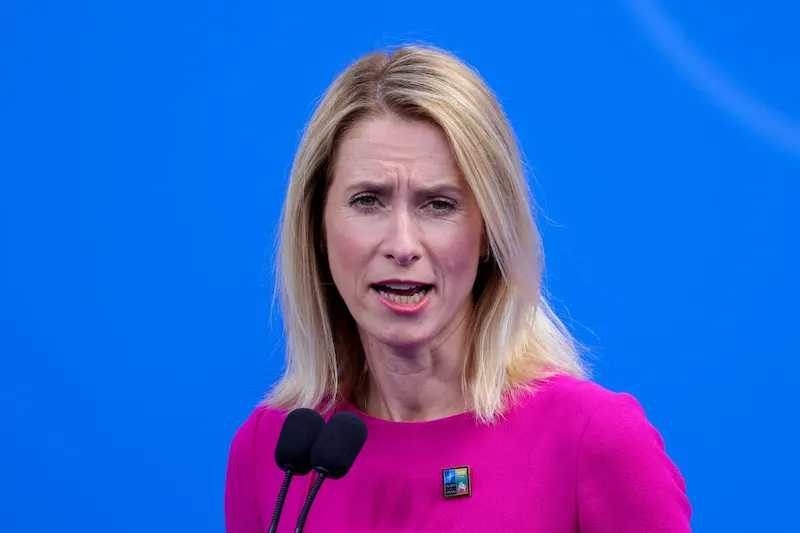


Estonia's President Alar Karis has made a rare statement, suggesting that Prime Minister Kaja Kallas should have resigned following recent revelations about her husband's business activities in Russia. While the President's role in Estonia is largely ceremonial and non-partisan, his comments may increase pressure on Kallas, who has stated that she has no plans to step down. President Karis expressed his personal preference for the head of government to resign, believing that it would have preserved the functioning of the government and the credibility of Estonia's messaging.
Prime Minister Kallas has gained a reputation as a strong voice against Russia's involvement in the war in Ukraine, making the fallout from these revelations a setback for her leadership. Despite the controversy, Kallas remains confident that she will receive the support of her Reform party and coalition partners if the opposition moves forward with a vote of no confidence.
The issue at hand revolves around Kallas' husband's business dealings in Russia. It is concerning for many in Estonia due to the tense relationship between the two countries. Kallas' firm stance on Russia has been a significant part of her political agenda, making the revelation of her husband's business activities in Russia an apparent conflict of interest.
The tensions between Estonia and Russia date back to the Soviet era and have been further exacerbated by Russia's annexation of Crimea in 2014 and its ongoing involvement in the conflict in Ukraine. Estonia, as a member of the European Union and NATO, has been vocal in its support for Ukraine and its opposition to Russia's actions.
The President's statement adds fuel to the political fire in Estonia, as parties and politicians grapple with the implications of Kallas' husband's business ties to Russia. While Kallas has shown no intention of resigning, the pressure from the President and public opinion may make it difficult for her to maintain the confidence of her government and the credibility she has built on the international stage. As the situation unfolds, Estonia will be closely watching to see how their government navigates this challenging situation and how it may impact the country's relationship with Russia and its standing within the European Union.