


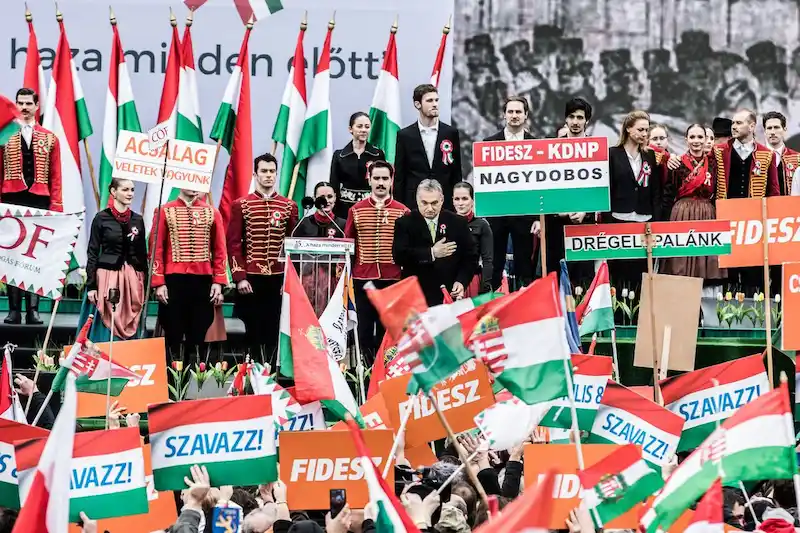


Hungarian Prime Minister Viktor Orban, who has been in power since 2010, has reportedly revealed his plan to continue governing until 2034, according to sources familiar with his intentions. This announcement comes shortly after Orban publicly declared his ambition to remain in office until 2030. The news was unveiled during an annual closed-door speech to his supporters, where he outlined his vision for Hungary's future.
Orban has been a controversial figure both within the European Union (EU) and internationally. He has faced criticisms for consolidating an unprecedented amount of power in Hungary, extending his influence over various aspects of the country's affairs, including the courts, business, culture, and education. In addition, he has built a powerful propaganda machine that has worked to silence political opposition.
Relations between Orban's government and the EU and US have deteriorated in recent years. The EU has suspended over $30 billion in funds designated for Hungary due to concerns over corruption and the rule of law. Similarly, the US has expressed dissatisfaction with Orban's refusal to loosen his control and his government's close ties with China and Russia, causing tensions between the two NATO allies.
During his speech, Orban presented a 15-point plan to strengthen Hungary, which has been facing challenges such as a yearlong recession and a severe labor shortage. The plan includes measures to boost fertility rates, modernize the military, and replace Russian nuclear fuel with French fuel at Hungary's sole nuclear plant, which is currently undergoing expansion led by Russia.
Orban's political career began in the 1980s as an anti-communist student leader, gaining recognition for his bold call for Soviet troops to leave Hungary even before the fall of the Iron Curtain. Initially, he governed as a center-right conservative during his first term as prime minister from 1998 to 2002. After spending eight years in opposition, Orban returned to power in 2010 as a nationalist and pro-Russian leader, steering Hungary towards closer ties with the East.
If Orban's plans materialize, he would become one of the longest-serving European leaders of modern times. However, given the controversies and opposition he faces domestically and internationally, it remains to be seen how successful he will be in staying in power until 2034.