


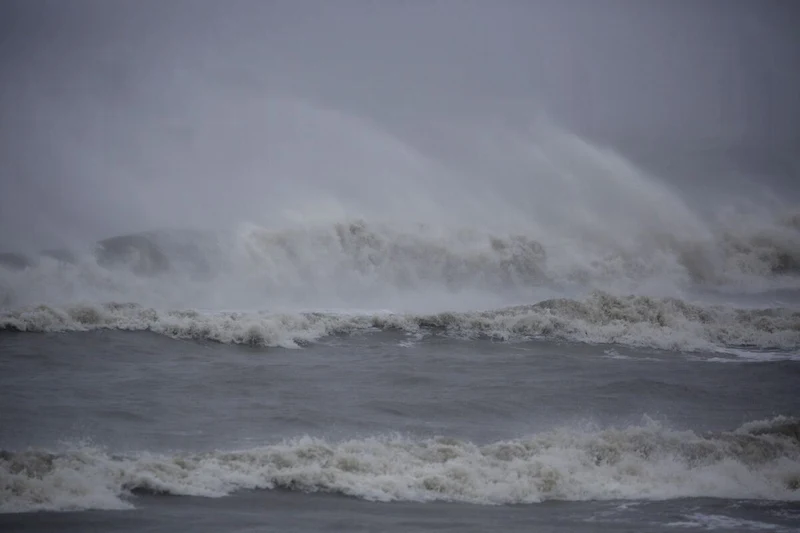


The Canadian Maritimes are preparing themselves for the full force of Hurricane Lee, while New England is expected to experience a milder impact with strong winds and potential surge along the coast. As Lee weakens and begins to disintegrate due to dry air and wind shear off North America, it is losing its structure, particularly the western side that is pointed towards New England. Despite this, Boston and the surrounding region will still feel the effects, with stiff winds forecasted and tides potentially rising up to three feet above normal levels.
Tropical storm warnings and hurricane watches have been issued from Massachusetts to Nova Scotia as the storm progresses. While Lee is forecasted to lose its tropical characteristics over the weekend, it will retain some of its strongest winds, transforming into a powerful nor'easter. However, it is not expected to pack the same punch as Hurricane Fiona, which devastated the Maritimes last year. Nevertheless, residents in Canada's Maritime provinces of New Brunswick and Nova Scotia, as well as parts of northeastern Maine, should prepare for tropical-storm strength winds and the possibility of up to four inches of rain, which could lead to flooding.
The coastal areas from New England to Canada will also experience crashing surf, with waves potentially reaching heights of 12 feet in certain locations. Meteorologist Rob Carolan suggests that the impact will be significant but less severe than Fiona's destruction. However, caution should still be exercised as the storm progresses.
In addition to Hurricane Lee, there are other weather systems to monitor. Tropical Storm Margot is currently active in the central Atlantic, west of the Azores, while a third system is developing between the Caribbean and Africa. These systems continue to be closely monitored for any potential impact.
Shifting our focus to Europe, it seems that autumnal heat will be warming up the capitals of the continent over the next 10 days. While southern Ireland to the Balkans can expect heavy rain and thunderstorms, cities such as Paris and Berlin are anticipated to reach temperatures as high as 28C (82F) and 28.5C respectively. London and the rest of the UK, on the other hand, will experience cooler temperatures as unsettled weather from the Atlantic brings strong winds and rain after the weekend.
In Australia, the country is bracing for a period of hot weather that may break seasonal records and pose a threat to some grain crops. Southern parts of the country could see temperatures soaring as high as 38C (100F), which is significantly higher than the seasonal average. The Bureau of Meteorology advises residents to take necessary precautions during this heatwave.
Finally, in Japan, the meteorological agency has forecasted an 80% chance of warmer-than-normal temperatures between September 16 and October 15 across most of the country. This indicates that Japan can expect a warmer autumn season ahead.