


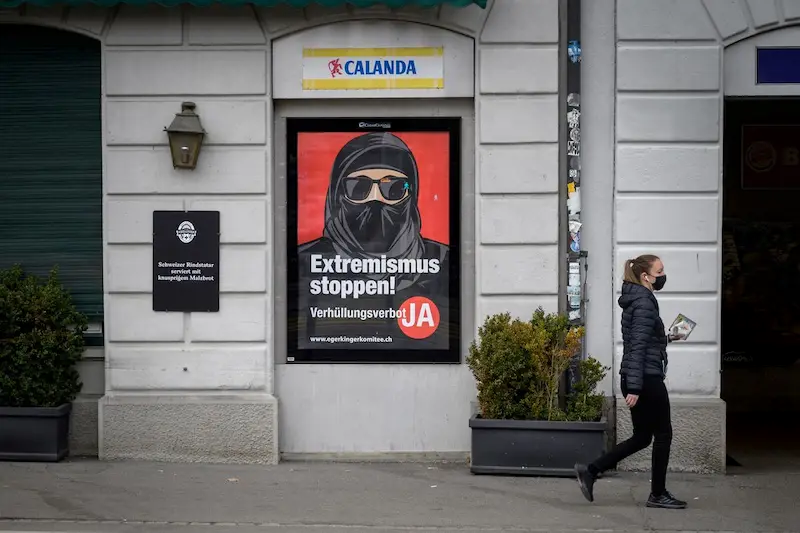


Switzerland has officially implemented a ban on full-face coverings, including the burqa, following a national vote two years ago where a majority of the population expressed support for such a measure. Spearheaded by a group associated with the anti-immigrant Swiss People's Party, the law imposes a fine of up to 1000 francs ($1116) on anyone caught wearing a veil that conceals their entire face in public.
While the ban technically applies to all garments that fully cover the face, it is widely believed to predominantly target religious veils, particularly those worn by Muslim women. The campaign leading up to the ban was met with criticism from Muslim groups, who argued that the number of women wearing burqas in Switzerland is exceedingly small. In fact, a spokesperson for the Purple Headscarves, a Muslim women's group, pointed out that there are only 30 women in burqas in the entire country. The vote was seen by some as an alarming signal of increasing anti-Muslim sentiment in Switzerland.
Certain exceptions have been included in the ban. Individuals are still permitted to wear face coverings at places of worship, for reasons related to their health (such as wearing a face mask), or during carnival celebrations. These exceptions aim to ensure that religious freedom and cultural traditions are not unduly restricted.
This ban on full-face coverings is the second major measure in Switzerland that appears to target the Muslim community. The first was the prohibition on the construction of new minarets in 2009, which came as a result of a campaign led by right-wing parties. These controversial measures have raised concerns about religious freedom and discrimination against Muslims in Switzerland.