


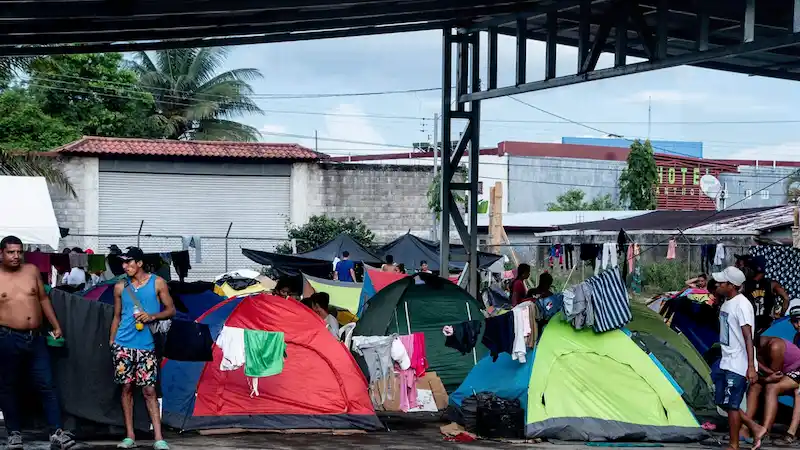


Costa Rica's President has taken the decision to declare a state of emergency in response to a significant increase in the number of migrants crossing through the country with the intention of reaching the United States. President Rodrigo Chaves made the announcement during a press conference, stating that people from various countries are passing through Costa Rica on their journey, including Venezuela, Ecuador, China, Colombia, Haiti, Yemen, and Bangladesh.
The International Organization for Migration has reported a staggering influx of migrants in Costa Rica. In the month of August alone, over 84,490 individuals entered the country via its southern border, marking a 55% increase compared to the previous month. This surge in migration has raised concerns and prompted the government to take immediate action.
Regionally, the situation is also alarming. The number of migrants crossing the dangerous Darien Gap, which serves as a crucial passage connecting Panama and Colombia, has reached a new record this year. Authorities have reported that 248,901 people have crossed the treacherous jungle in 2023, with approximately 20% of them being children and adolescents.
President Chaves recently visited US President Joe Biden to discuss migration-related issues and explore potential solutions. As part of the effort to address the influx, Costa Rica, along with other countries, is set to establish safe mobility offices. These brick-and-mortar processing centers aim to provide migrants with an opportunity to apply and migrate legally to the US, as well as other countries, instead of continuing their journey to the border.
The Biden administration's Safe Mobility initiative has already seen success. So far, over 38,000 individuals have registered in Colombia, Costa Rica, and Guatemala for this program, according to a White House official. This collaborative approach with international organizations seeks to provide alternatives for migrants, ensuring safer and legal migration pathways.
With the state of emergency declaration and the implementation of safe mobility offices, Costa Rica hopes to better manage the increasing flow of migrants passing through its borders and support their efforts to migrate legally and safely. The situation remains complex, but the government's proactive response signals its commitment to finding viable solutions to address the challenges posed by this growing trend.