


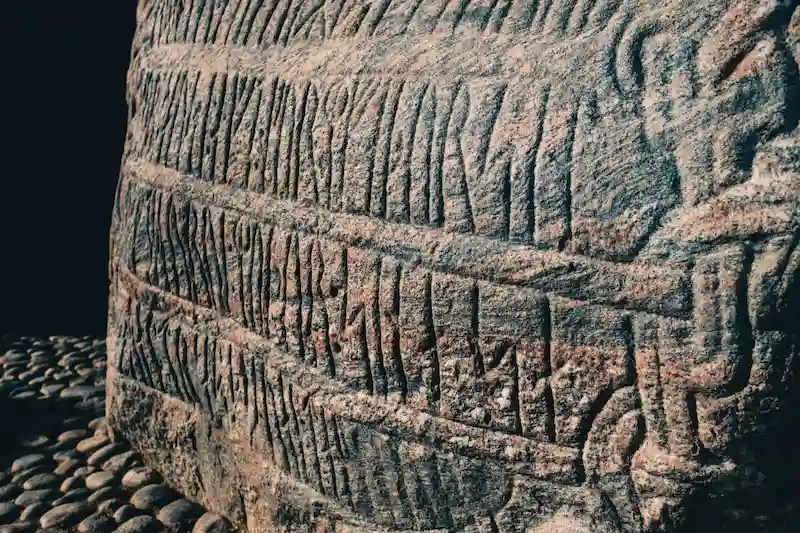


New research conducted in Denmark has shed light on the remarkable power held by royal women during the Viking Age, challenging previously held assumptions. The National Museum of Denmark has published findings suggesting that Queen Thyra, the wife of the first Danish king, Gorm the Old, played a more significant role than her husband and son. The study revealed that Queen Thyra was mentioned on four rune stones, which were ancient Viking monuments symbolizing authority and influence. This is more mentions than any other individual at the time, including Gorm and her son Harald Bluetooth, who were only mentioned on two rune stones each, with Gorm's mentions solely connected to Thyra.
The discovery of Queen Thyra's prominent influence was made during a project that utilized 3D scanners to analyze the rune scripts on Denmark's famous Jelling stones. These findings support the hypothesis that gender equality among the Vikings differed from prevailing norms in contemporary societies. The researchers suggest that Queen Thyra's significant presence indicates a level of equality between genders within Viking society.
The research also indicates that Queen Thyra likely hailed from a more prestigious and ancient lineage compared to Gorm, who is traditionally regarded as Denmark's first king. Lisbeth Imer, a senior researcher and runologist involved in the study, describes this finding as incredibly intriguing in terms of understanding power dynamics and the formation of Denmark as a nation during its formative period.
Adam Bak, the head of the museum where the Jelling stones are housed, suggests that Gorm's position as king may have been primarily due to his marriage to Thyra. He reveals that the museum plans to dedicate more exhibition space to highlight the significant role of Queen Thyra in the upcoming exhibitions, recognizing her as a key figure in shaping Danish history.
These new findings challenge the common presumption that Viking society was purely patriarchal and underscore the importance of reevaluating historical narratives to ensure a more accurate understanding of the power dynamics and achievements of women during the Viking Age. The story of Queen Thyra highlights the complexity of Viking society and provides a valuable insight into the early formation of the Danish nation.