


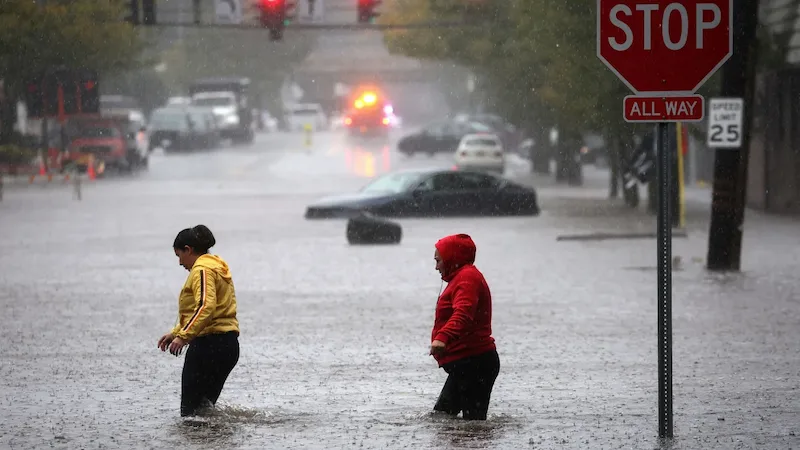


Torrential rain has caused widespread chaos and disruptions in the New York City area, leading to rescues, road closures, and overwhelmed basements. The region experienced a month's worth of rainfall, more than 4 inches, in just three hours, resulting in dangerous and life-threatening conditions. The National Weather Service has issued warnings of even higher rainfall totals exceeding 8 inches in parts of the tri-state area. New York City Mayor Eric Adams emphasized that the severe weather is far from over, urging residents to remain cautious.
As a response to the dire situation, New York Governor Kathy Hochul declared a state of emergency for New York City, Long Island, and the Hudson Valley. She urged residents to stay at home due to the hazardous travel conditions that have emerged. Firefighters have already conducted numerous rescues at flooded basements, and floodwater has infiltrated 150 schools in the city. Although schools remained open, one in Brooklyn evacuated after the floodwater caused the school's boiler to emit smoke.
In addition to flooding streets and basements, the torrential rain has severely impacted transportation systems. Subways and railways experienced major disruptions, with subway services suspended on 10 train lines in Brooklyn and all three Metro-North train lines. To mitigate the impact, the city has deployed extra buses to address the void left by the train outages. The floodwater has also overwhelmed sewers and flooded roads in various areas, including Manhattan, Queens, and Hoboken, New Jersey, leading to road closures and water rescues.
Flight operations at all three New York City area airports have been significantly disrupted, resulting in widespread flight delays. The historic Marine Air Terminal at LaGuardia Airport was forced to close due to flooding, affecting airlines such as Spirit and Frontier. With the expected continuation of heavy rainfall, a travel advisory remains in effect until early Saturday morning, with further flooding anticipated.
The severe weather extends beyond New York City, impacting approximately 25 million people across the Northeast. Southern New England is expected to experience heavy rain, with the highest rainfall concentrations forecasted for Connecticut. Flash flood warnings have already been issued for parts of the state. Rainfall of 1 to 3 inches is also probable in central Connecticut, portions of Rhode Island, and parts of Massachusetts, including Boston.
The extraordinary rainfall rates have resulted in remarkable rainfall totals. In Brooklyn alone, a month's worth of rain fell in just three hours, measuring up to 4.5 inches. Such intense rainfall is only expected to occur approximately once every 100 years. Central Park in Manhattan recorded almost 2 inches of rain in one hour, the second-wettest hour in the park's 80-year history. At John F. Kennedy International Airport in Queens, over 6 inches of rain has fallen since midnight, ranking it as the third-wettest day on record.
The situation continues to unfold, with authorities urging residents to prioritize their safety and adhere to the warnings and instructions provided. The impact of this severe weather event will be closely monitored as emergency services work diligently to ensure the well-being of affected individuals and areas.