


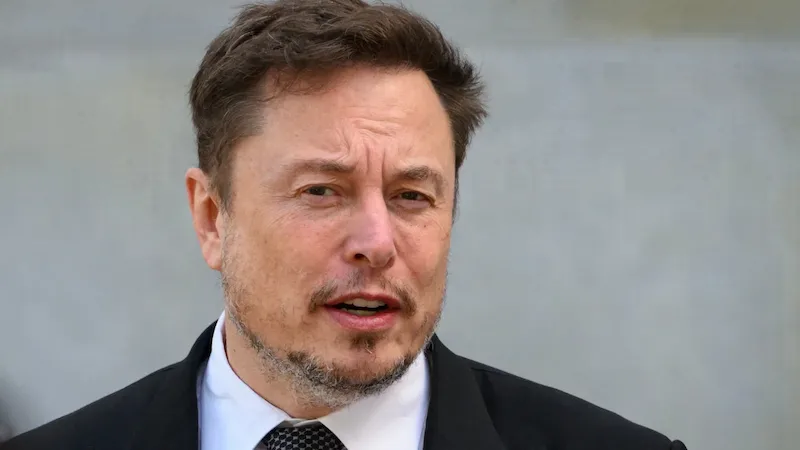


Germany has fired back at billionaire businessman Elon Musk after he weighed in on the country's immigration debate. Musk shared a post on the social media platform X that criticized German non-governmental organization (NGO) operations in the Mediterranean for allegedly "unloading illegal immigrants" in Italy. The post also voiced support for the far-right Alternative for Germany (AfD) party in the upcoming elections. Musk, who owns X, shared the post with his 158 million followers, questioning whether the German public was aware of these alleged actions.
In response to Musk's comment, the German Foreign Office took to X to defend the NGO operations, stating, "Yes. And it's called saving lives." Musk, however, stood firm in his criticism, expressing doubt in another post that the majority of Germans supported this approach.
Musk's remarks come at a time when Germany is embroiled in a dispute with Italy over NGO sea operations. Germany's Interior Ministry recently suspended its intake of migrants coming via Italy under a European voluntary solidarity plan. Italian Prime Minister Giorgia Meloni raised concerns about unloading the migration burden on other countries, emphasizing the need for a comprehensive solution. Meloni noted that she had spoken with German Chancellor Olaf Scholz and suggested that Germany might be reconsidering its stance.
During the 10th summit for MED9 countries, which includes France, Italy, Spain, Portugal, Greece, Cyprus, Malta, Croatia, and Slovenia, leaders discussed migration-related issues. A joint statement released after the meeting called for rapid responses to the increasing arrivals through Mediterranean routes. The MED9 leaders urged the European Union (EU) to address the root causes of irregular migration, reduce primary movements, enhance the rate of returns for failed asylum seekers, and prevent departures effectively.
The perilous journey undertaken by tens of thousands of migrants each year in search of safety and better opportunities often results in overcrowded and unsafe vessels. Rescuing these migrants poses a challenge, leading to disputes among countries about responsibility and burden-sharing. It remains a complex issue without a simple solution, requiring international cooperation and effective measures to address the underlying causes of irregular migration.