


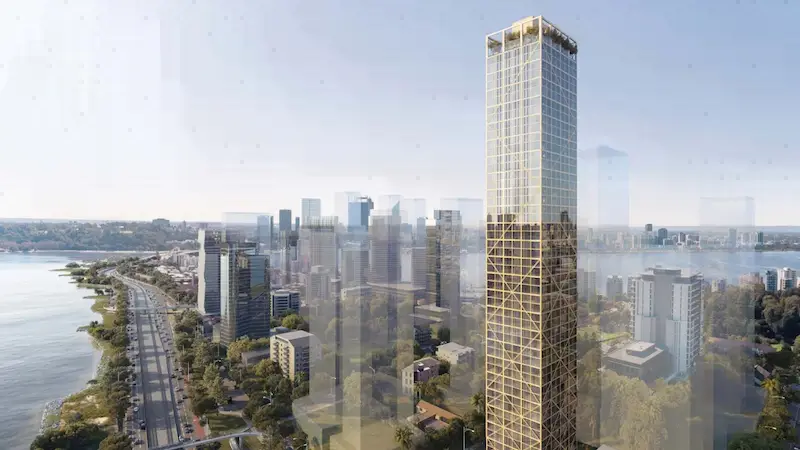


Plans have been approved for the construction of the world's tallest wooden building in Western Australia. The proposed tower, known as the C6 building, will stand at an impressive height of 191.2 meters (627 feet). This would make it almost twice as tall as the current record holder. The development, by Grange Development, is a "hybrid" tower, combining mass timber with reinforced concrete. The timber will make up 42% of the building, with the columns and core being made from concrete.
If completed, the C6 building will surpass the Ascent tower in Milwaukee, Wisconsin, which currently holds the record for the tallest timber-concrete hybrid building. Standing at 86 meters (284 feet), the Ascent tower will be overshadowed by the proposed tower in Perth. Additionally, the C6 building will also surpass the height of the forthcoming Atlassian Headquarters in Sydney, which is set to claim the record from the Ascent tower once completed.
The C6 tower will utilize laminated timber beams and a steel exoskeleton to support the structure, following a similar approach as the Atlassian Headquarters. The developers aim to prioritize sustainability and environmental consciousness with this project. The tower will be Western Australia's first carbon-negative residential building, according to Grange Development. They plan to achieve this by using 7,400 cubic meters (over 260,000 cubic feet) of timber sourced from 600 trees. The developers assert that the construction industry needs to address the housing crisis and the climate crisis simultaneously.
One of the main advantages of using timber in construction is its lower carbon footprint compared to traditional building materials like steel and concrete. Cement production, in particular, contributes to 8% of all CO2 emissions. By replacing concrete and steel with timber, the environmental impact of the building can be significantly reduced.
However, some experts have expressed skepticism about the claim that the C6 building will be carbon-negative. They argue that for it to be truly carbon-negative, the carbon stored in the building's timber components should exceed the emissions of other materials used. Nevertheless, the increasing use of timber in construction is seen as a significant step forward in reducing the environmental impact of buildings.
Aside from its sustainability features, the C6 tower will also include additional green elements such as a rooftop garden, an urban farm, and access to fully-electric vehicles for residents. These features further contribute to the overall eco-consciousness of the project.
Overall, the approval of the C6 building in Western Australia marks a significant milestone in the global push for sustainable construction practices. With the potential to be the tallest wooden building in the world, this hybrid tower serves as a prominent example of the growing trend towards incorporating timber into high-rise structures.