


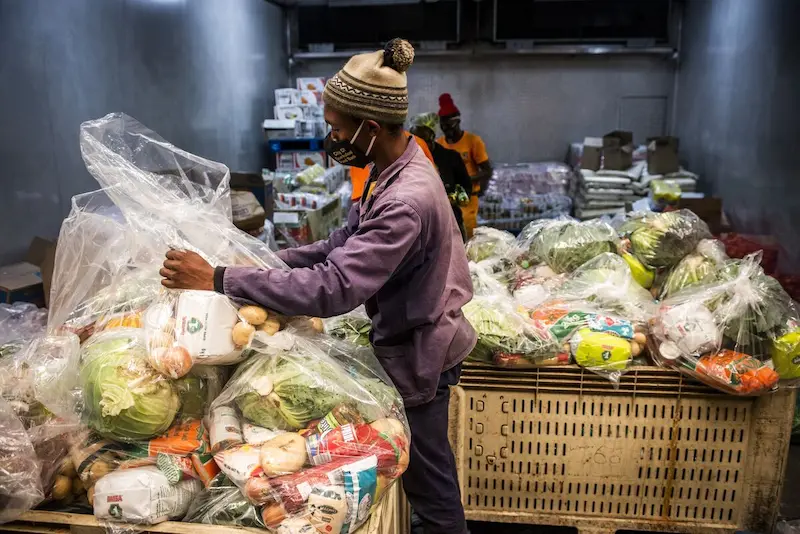


A recently conducted research by the World Data Lab reveals that the number of people unable to meet their minimum food consumption needs in South Africa is expected to slightly decrease over the next few years. However, the study warns that by 2025, nearly 49% of South Africans will continue to face food insecurity. This figure is a marginal improvement from the height of the coronavirus pandemic in 2020 when 52% of the population struggled to access adequate food.
The findings of the research were part of Shoprite Holdings Ltd.'s food index, which aims to shed light on the issue of food insecurity in the country. The study highlights that the Western Cape, Free State, and Eastern Cape provinces show the most progress in addressing hunger within their respective regions.
Sanjeev Raghubir, the head of sustainability and corporate social investment at Shoprite, emphasized the urgent need to escalate efforts in helping people escape food insecurity. While the modeling suggests an improvement by 2025, Raghubir emphasized that nearly half of the population will still be grappling with hunger in two years' time. He emphasized that addressing this issue not only improves the prospects of individuals but also of the entire country.
Shoprite, Africa's largest grocer, commissioned the research to raise awareness about food insecurity and encourage the active involvement of South Africans in combating hunger and poverty. The company believes that by bringing attention to this critical issue, collective efforts can be made to alleviate the suffering faced by a significant portion of the population.
It is important to note that South Africa faces significant challenges in terms of inequality. In fact, it is considered the most unequal country in the world where data is available, according to the World Inequality Lab backed by Thomas Piketty. This inequality exacerbates the issue of food insecurity, making it essential for both government and societal interventions to address this pressing concern.
Clearly, the battle against food insecurity in South Africa is far from over. The research findings serve as a reminder that concerted efforts and action plans are needed to ensure that access to food becomes a fundamental right for all citizens. Only by working together can South Africa successfully overcome this crisis and pave the way for a more inclusive and prosperous future.