


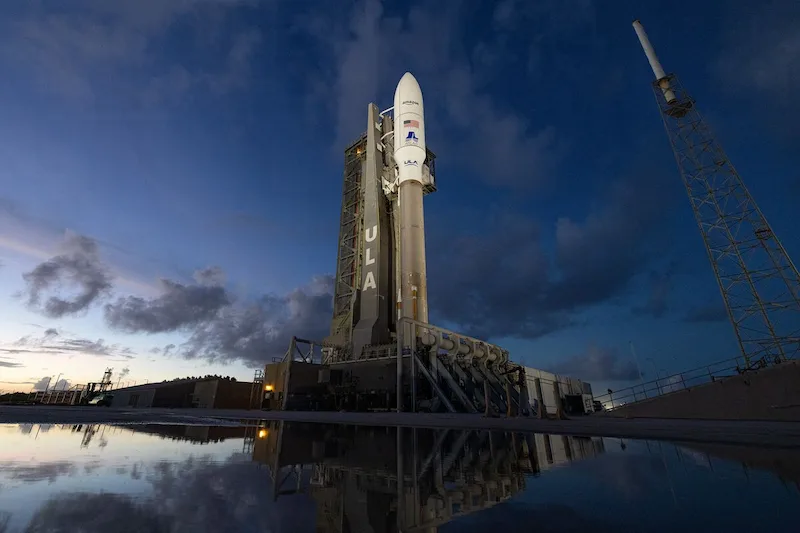


Amazon's ambitious Project Kuiper, aimed at providing global broadband internet coverage, has taken a significant step forward. The company recently announced that its prototype satellites, launched on October 6, are performing well in orbit. The two satellites have been successfully drawing power from their solar panels and maintaining consistent communication with Amazon's ground terminal. This successful milestone marks a crucial step towards Amazon's mission of launching a constellation of over 3,000 satellites into low Earth orbit.
Rajeev Badyal, the Vice President leading the Kuiper team at Amazon, expressed his satisfaction with the progress. "We're already learning a lot from this mission," Badyal stated. He also highlighted that this achievement would contribute to further improvements in their production systems. With everything going smoothly, Amazon can now focus on the next phase of the mission, which includes testing the data network system and the links to the internet and customer terminal antennas.
Project Kuiper aims to bridge the digital divide by delivering affordable, high-speed broadband internet access to underserved communities worldwide. This ambitious project aligns with Amazon's broader goal of making internet access more accessible and convenient for people across the globe.
The constellation of satellites that Amazon plans to launch will orbit at an altitude of around 590 kilometers. This low Earth orbit configuration offers advantages such as reduced signal latency and improved coverage compared to higher altitudes. By leveraging this network of satellites, Amazon intends to provide reliable internet connectivity to areas where traditional infrastructure is expensive or challenging to implement.
The competition in the space-based internet market is fierce, and there are already players like Elon Musk's SpaceX, which has deployed thousands of Starlink satellites. However, despite the competition, Amazon remains confident in the success of Project Kuiper. With its vast resources, technical expertise, and commitment to innovation, Amazon hopes to carve out its space in the satellite internet market and offer a viable alternative for individuals, businesses, and communities around the world.
As the next phase of the mission unfolds, Amazon will focus on refining the system's data network capabilities. They will extensively test the connections to the internet and customer terminal antennas, ensuring seamless and reliable transmission of broadband signals. These crucial tests will provide valuable insights and enable the further enhancement of Kuiper's technology.
While it may still be some time before the full deployment of the Kuiper satellite constellation, Amazon's early success with its prototype satellites is an encouraging development. As the company continues to gather data and refine its systems, they inch closer to fulfilling their vision of a global satellite-based internet network. With the potential to revolutionize global internet accessibility, Project Kuiper represents another ambitious venture from Amazon, further solidifying the company's position as a technological pioneer.