


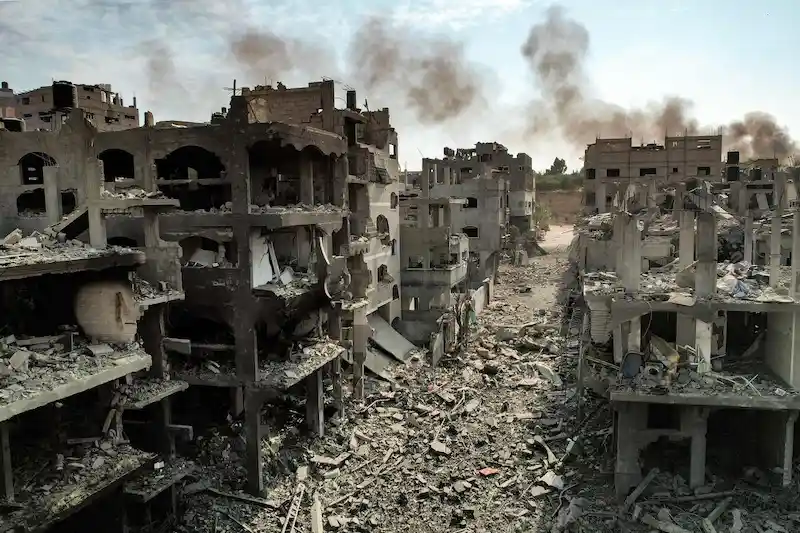


As the Israel-Hamas conflict continues to escalate, concerns mount about the potential impact on the global economy. The recent explosion at a Gaza City hospital, which killed hundreds of people, has deepened the complexity of the situation. Palestinian officials and Israel have traded blame for the incident, while US President Joe Biden's visit to the region has been marred by the attack. Originally, Biden planned to meet with both Israeli and Arab leaders to discuss containing the conflict and providing aid to Gaza civilians. However, the meeting with Arab leaders was canceled in light of the hospital explosion.
Efforts by Biden and other Western leaders to prevent the conflict from escalating and mitigate the humanitarian crisis in Gaza are becoming more urgent. Rosalind Mathieson, the news director of Bloomberg, emphasizes the growing concern among world leaders about the catastrophic situation unfolding in Gaza. The fear is not only for the humanitarian crisis but also for the potential spillover of the conflict, leading to a wider regional catastrophe.
According to Bloomberg Economics research, a wider war could have severe repercussions on the world economy, potentially pushing it into recession. The increasing geopolitical risks are being felt in global markets, which are beginning to react to the escalating conflict. The oil market, in particular, is being closely watched, as higher prices for oil could come into play. The knock-on effects on the global economy could be significant, considering the backdrop of high inflation and the possibility of central banks needing to keep interest rates higher for longer.
The implications for the global economy are unsettling. A protracted conflict and worsening regional instability could disrupt supply chains, hinder trade, and dampen investor confidence. Uncertainty and geopolitical risks are factors that investors closely monitor, and the ongoing conflict between Israel and Hamas is heightening these concerns.
It is crucial for world leaders and international organizations to act swiftly and effectively to de-escalate the situation, provide humanitarian assistance, and facilitate dialogue between the conflicting parties. The stability of the Middle East and its impact on the global economy cannot be underestimated. Devising a sustainable and lasting resolution to the Israel-Hamas conflict is imperative not only for the people directly affected but also for the stability and prosperity of the global community.
In conclusion, the Israel-Hamas conflict poses an increasing risk to the global economy. The recent hospital explosion in Gaza City adds layers of complexity to ongoing efforts to contain the conflict and provide aid to civilians. The humanitarian catastrophe in Gaza and the potential for the conflict to spread into the region raise concerns among world leaders. Moreover, the geopolitical risks associated with the escalating conflict are reverberating through global markets, affecting investor confidence and potentially tipping the world economy into a recession. Swift action and effective diplomacy are essential to prevent further escalation and find a sustainable resolution to the conflict.