


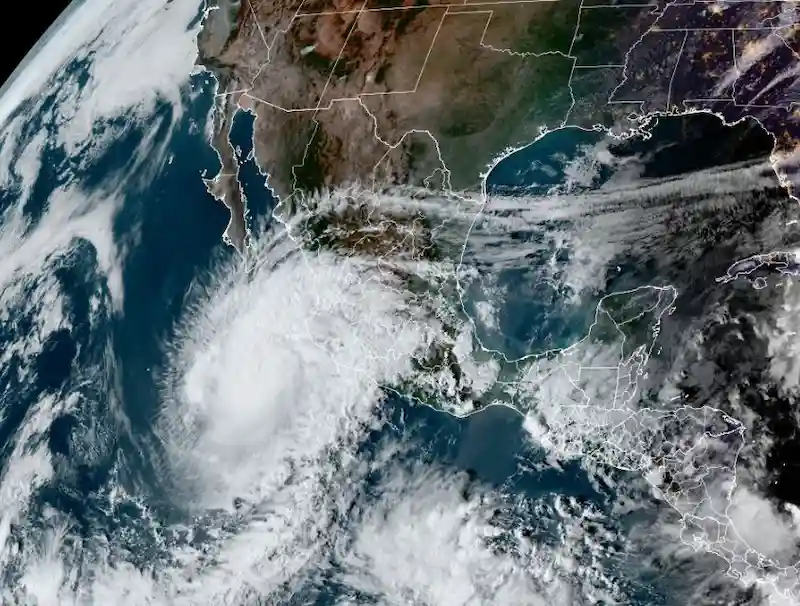


Mexico's Baja California Sur, particularly Cabo San Lucas, is preparing for the imminent arrival of Hurricane Norma, which is expected to bring heavy rain and high winds to the region over the next few days. As of early Friday, Norma is classified as a Category 3 storm, with maximum sustained winds of 115 miles per hour, according to the US National Hurricane Center.
Located approximately 295 miles south-southeast of Cabo San Lucas, Hurricane Norma is forecasted to potentially make a brief landfall on Saturday or early Sunday. However, after passing through Baja California, it is expected to weaken to tropical storm strength with winds of 70 mph, before eventually making its final landfall on Mexico's west coast near Mazatlán on Monday. Subsequently, the storm is predicted to dissipate.
The anticipated impact of Hurricane Norma for Baja California Sur includes significant rainfall ranging from five to ten inches, with certain areas possibly receiving up to 15 inches. As a result, the region is likely to experience flooding and landslides. Residents and authorities are taking necessary precautions to ensure the safety of the local population and minimize damage.
Meanwhile, in the Atlantic Ocean, Tropical Storm Tammy is gaining strength and is projected to reach hurricane status as it passes through the Lesser Antilles in the eastern Caribbean islands, marking a potential threat to the US and British Virgin Islands, as well as Puerto Rico. Tammy currently has maximum sustained winds of 60 mph, which are expected to strengthen to 75 mph by late Saturday.
As Tammy progresses, one to two inches of rain is forecasted for the aforementioned islands, with isolated areas potentially receiving up to four inches. Residents in these regions are advised to stay informed about the storm's trajectory and take necessary precautions.
In other weather-related news, Scotland is currently facing severe flooding and a significant risk to lives for the second consecutive day due to Storm Babet. The UK's Met Office has issued warnings urging residents to remain cautious and take appropriate measures to protect themselves and their property.
Additionally, Australia's wheat output is projected to decrease further this season, particularly in Western Australia, due to the hot and dry weather conditions. Insufficient rainfall has resulted in parched crops, significantly impacting the harvest.
Looking ahead, the northern parts of the United States can expect a relatively mild winter; however, cities along the East Coast, including New York, should prepare themselves for heavy snowstorms. Last winter saw very little snowfall, but this upcoming season is predicted to bring back the winter weather in full force.