


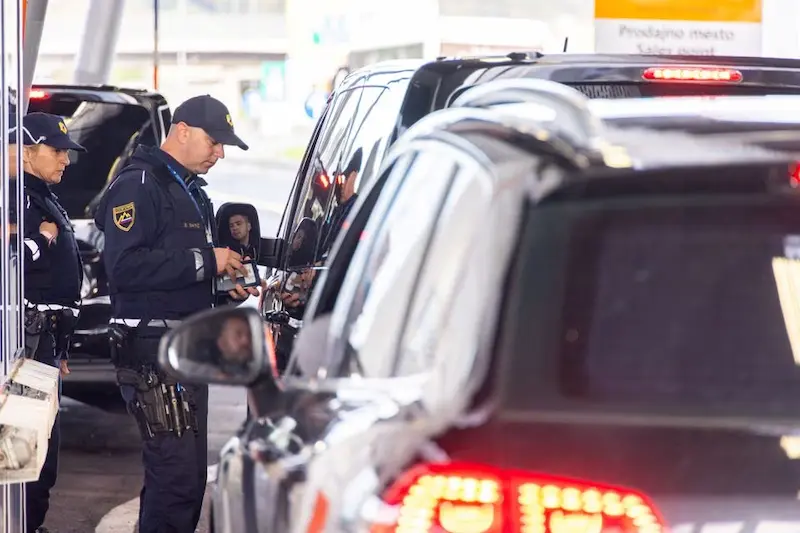


Slovenia has deployed police officers on its border crossings with Croatia and Hungary in an effort to enhance security and tackle potential threats. This move follows Italy's decision to introduce border controls with Slovenia to improve homeland security. The Slovenian government has implemented temporary border controls until October 30. Police officers have been stationed at 14 border crossings, while the remaining 18 crossings will not have a permanent police presence.
As a result of these security measures, travelers have encountered queues and delays as their documents are being thoroughly checked at border crossings. The Obrezje crossing, situated on the border with Croatia, saw significant congestion as checks had not been conducted since Croatia joined the control-free Schengen Area on January 1 of this year. Anxious travelers like Katica Fjacko, who was journeying from the Croatian capital Zagreb, expressed concern over the increased chaos caused by the intensified controls.
The Slovenian government has justified these border controls by citing security threats potentially linked to individuals who are affiliated with "various terrorist and extremist movements and groups." It warns of the possibility of such individuals migrating from areas of armed conflict with the aim of reaching Europe. Additionally, the government has highlighted an increase in organized crime in the western Balkans as another reason for implementing these measures.
By deploying police officers at selected border crossings, Slovenia aims to enhance its border security and maintain high levels of vigilance. These temporary controls are part of a broader effort across Europe to ensure the safety of its citizens amidst an evolving security landscape.