




Amidst a flurry of conflicts and rising tensions, the United States is finding itself stretched thin on multiple fronts, raising concerns among allies about its ability to effectively respond to all the challenges it faces. From the Middle East to Ukraine and the ongoing rivalry with China, the US defense industry is struggling to keep up with the increasing demand for weapons and support. This has prompted fears among officials in Europe and Asia that some partners might be left unsupported, leaving room for rivals like China, Russia, and Iran to exploit the situation.
President Joe Biden entered office promising that America is back, ready to take on global challenges. However, the current situation has put his administration under pressure to deliver on these promises. Privately, officials admit that the escalating crisis in the Middle East has disrupted their plans of shifting focus towards countering China's growing influence. The US had been reducing its presence in the region, confident that Israel's improved relationships with Arab countries would ensure its security. However, recent events have called that assumption into question, leading to a renewed deployment of US forces to the region.
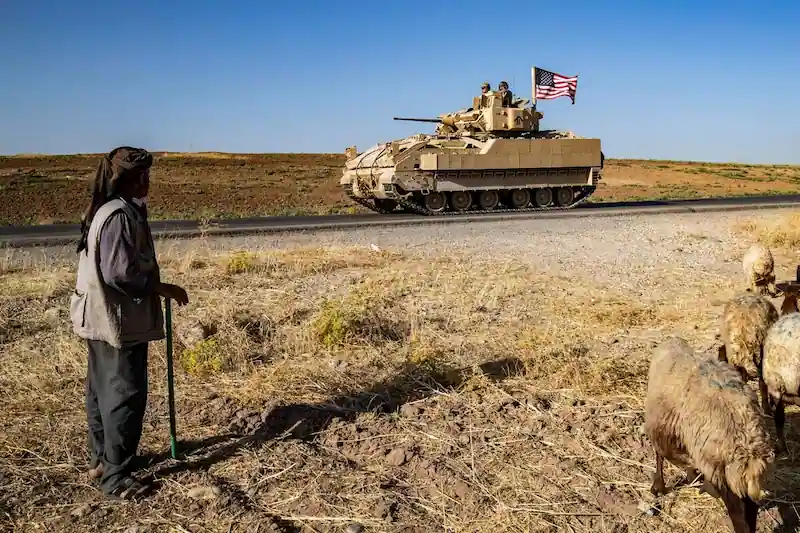
The sudden surge of conflicts has also raised concerns about Israel's military capabilities, as it failed to detect and defend against the recent Hamas attack. As a result, the US has urged Israel to postpone its ground offensive in Gaza while reinforcing regional defenses. The ongoing tensions in the Middle East have prompted the US to launch airstrikes in Syria, responding to attacks by Iran-backed militias that have targeted US bases in the region. While current plans do not involve US troops engaging in ground battles, President Biden remains aware of the potential risks and the possibility of being drawn further into the conflict.
On the other front, the situation in Ukraine has showcased the limits of the US defense supply chain. While the US has pledged support, including military and financial aid to Ukraine, there are growing concerns in Congress about the sustainability of this commitment. As Ukraine's progress against Russian forces slows and the conflict settles into a stalemate, the Kremlin believes it can outlast the US and its allies. Moreover, the ongoing conflict has highlighted the fragility of the US defense industry's ability to quickly ramp up production. Artillery shells, a vital weapon in the Ukrainian conflict, are running low, and efforts to increase production have faced setbacks.
Compounding these challenges is the fact that Israel and Taiwan, two key US allies, have also placed orders for the same types of weapons that Ukraine requires. This has placed additional strain on the already overwhelmed defense industry. With military spending at its lowest level as a share of the economy in decades, the industry is ill-prepared for a sudden surge in demand. The consolidation of prime defense contractors further exacerbates the issue, with only five major contractors remaining compared to 51 in 1993.
Former Secretary of Defense Chuck Hagel expresses concern about the United States overreaching during a time of global complexity and uncertainty, coupled with internal divisions and dysfunction. The US government's financial pressures and rising borrowing costs further complicate matters, making it increasingly challenging to allocate resources to the defense sector.
In conclusion, the United States finds itself grappling with multiple conflicts and escalating tensions, straining its ability to fulfill its global commitments and support its allies. The challenges in the Middle East and Ukraine have disrupted plans to pivot focus towards countering China, causing concern among officials worldwide. The fragile defense supply chain and limited resources of the US defense industry are struggling to keep up with the demands of multiple conflicts simultaneously. As the global situation remains uncertain, the United States faces the risk of overextending itself during a complex and critical period.