


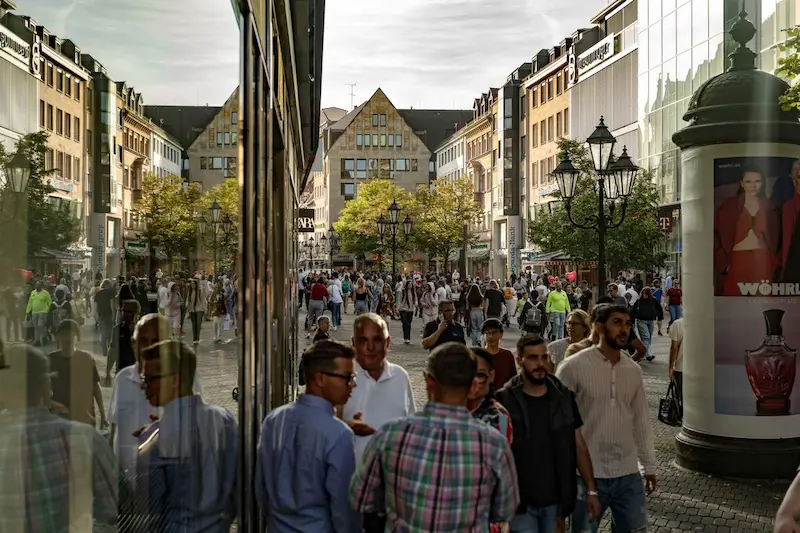


Germany's economy contracted in the third quarter, raising concerns that the country might be headed for a recession. The gross domestic product (GDP) fell by 0.1% from the previous three months, which was slightly less than the 0.2% drop economists had expected. This decline was primarily attributed to a slowdown in household spending, highlighting Germany's struggle to recover from a downturn caused by energy-related issues in the winter followed by two quarters of minimal growth.
Germany is the only major economy that the International Monetary Fund (IMF) projects to contract this year. The country's long-term prospects are being questioned, as higher interest rates both domestically and globally are significantly impacting demand for industrial goods, which Germany relies on more than its counterparts for growth. To combat these challenges, companies like chemical giant Lanxess AG have announced job cuts, while Volkswagen AG is focusing on cost-saving measures to improve profitability.
Although Germany's services sector had been relatively resilient, recent business surveys by S&P Global indicate a slowdown in momentum there as well. Additionally, cracks are beginning to appear in the labor market, which has been a bright spot thus far. As the fourth quarter begins, private-sector activity continues to contract, according to S&P Global.
However, there is hope that cooling inflation and rising wages will spur a consumer-driven rebound in the German economy. A recent Bundesbank report suggested that households have yet to increase their spending. Analysts polled project a growth rate of 0.5% for Germany in 2024.
GDP data from other European countries have been a mixed bag. While Spain and Belgium have maintained growth, Austria has fallen into a recession due to a slump in consumption and investment. On Tuesday, figures for the overall euro zone's GDP are expected to be released, with estimates suggesting stagnant growth between July and September.
Germany's recent sluggish performance has heightened concerns about its future potential. Challenges such as an aging workforce, a heavy reliance on China, and the urgent need to transition to new energy sources all pose significant hurdles. However, top officials including Bundesbank President Joachim Nagel have warned against excessive pessimism, emphasizing Germany's ability to adapt. Nonetheless, there is an acknowledgment that action must be taken to safeguard Germany as an attractive destination for businesses, as stated by Economy Minister Robert Habeck last week.