


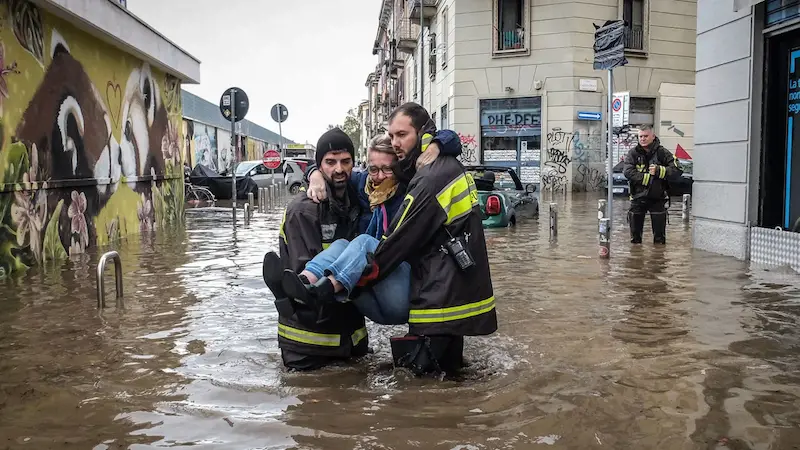


A powerful storm unleashed its fury on Northern Italy, bringing heavy rain and violent winds that caused chaos and devastation. The region was hit hard overnight and early Tuesday, resulting in rapid floods through central Milan and the overflow of Lake Como. The picturesque lake, renowned for its beauty and tourist allure, saw waterside bars inundated, prompting civil protection authorities to deploy pumps and mobile barriers to mitigate the damage. Additionally, the Seveso River, flowing through Como, Monza e Brianza, and Milan, breached its banks, compounding the widespread flooding situation.
The impact of the storm was particularly severe in Milan, where several areas became inaccessible due to the deluge. Disturbing images circulated on social media, depicting water cascading down stairs into subway stations and pedestrians struggling against the raging winds. Marco Granelli, the city's safety councilor, reported numerous incidents of fallen trees, collapsed scaffolding, and roof tiles being ripped off by the relentless gusts. As a precautionary measure, electricity was temporarily cut off in various parts of the city until downed power lines could be cleared.
Tuscany, located in Central Italy, also bore the brunt of the storm's wrath, experiencing torrential rainfall that triggered floods, toppled trees, and caused landslides. In just 24 hours, 257 millimeters of rain drenched the region—surpassing the average monthly precipitation for this time of year. One narrow escape involved a tree falling on a moving car; fortunately, the driver escaped unharmed.
Scientists assert that such extreme weather events, characterized by heavy rain and storms, are likely to intensify and become more frequent as the climate crisis worsens. Italy, with its geographical vulnerability to landslides and its proximity to the warming Mediterranean Sea, faces a heightened risk of enduring severe storms. These climatic challenges are expected to persist in the future, necessitating proactive measures to counteract their impact.
Venice, nested in the northeast of the country, narrowly avoided flooding during this turbulent storm, thanks to the MOSE system of floodgates. Mayor Luigi Brugnaro confirmed that strong winds from the north pushed water up into the city, combining with the high tides associated with the full moon to cause an "exceptional" tide measuring 154 centimeters. Considering that the highest-ever recorded tide stands at 194 centimeters in 1966, Venice came perilously close to widespread inundation. The MOSE project, consisting of 78 floodgates, has been in place since 2020, proving its efficacy in protecting the city from record-breaking flooding.
The forecast for Italy does not bring much respite, as rain is expected to persist throughout the week. To address this imminent threat, Italy's civil protection agency has issued a red alert until November 1 for all areas in the Veneto region, including Venice. Additionally, six regions in the north are under an orange alert, while 11 regions remain on yellow alert for the next 24 hours. These precautionary measures aim to ensure the safety of residents and travelers alike during a busy holiday season when over 8 million Italians are anticipated to be on the move.
This year has been marked by deadly flooding incidents in Italy. In May, torrential floods ravaged the northern region of Emilia Romagna, resulting in the loss of at least 14 lives. Numerous rivers overflowed, triggering hundreds of landslides and submerging homes and farmland. The country's vulnerability to such calamities underscores the urgency of adapting to the challenges posed by the changing climate and implementing resilient infrastructure to safeguard lives and property.