


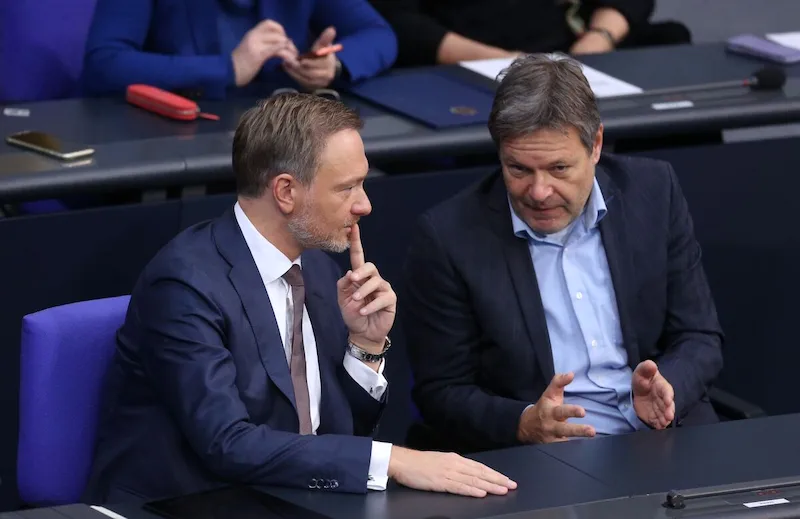


Germany’s next election isn’t due until 2025, but the country's political landscape is already abuzz with campaigning. One politician who has seized the early initiative is Robert Habeck, the Greens’ economy minister. Habeck has made bold moves by calling for loosening budget restrictions and venturing into foreign policy territory. These unexpected maneuvers have sparked attention and garnered praise from across the political spectrum.
In his call to loosen budget restrictions, Habeck directly confronted Finance Minister Christian Lindner of the Free Democrats, who is known for his fiscally hawkish stance. This move was a clear signal that Habeck intends to tackle key issues in the upcoming election campaign. Cornelia Woll, president of the Hertie School and professor of international political economy, believes that Habeck recognizes the challenges he faces and sees the federal elections of 2025 as the battleground for such issues.
The discord and sense of drift within the current coalition government have paved the way for the far-right Alternative for Germany (AfD) party to rise in popularity. However, with two years left until the next election, Habeck is emerging as a potential challenger to both Chancellor Olaf Scholz and conservative leader Friedrich Merz. Habeck's recent interviews and statements have underscored his willingness to advocate for expansive government spending, even though he acknowledges the limitations imposed by the coalition's fiscal stance.
In a recent interview with Bloomberg, Habeck emphasized the importance of considering adjustments to budget rules and European regulations, given the changing geopolitical landscape and global challenges. He highlighted the need to address the German economy's adaptation to the absence of Russian gas, competition from China, and the resurgence of wars. Habeck's stance reflects his belief that thinking critically about policy matters is crucial in politics.
During the 2021 election, Habeck made way for Annalena Baerbock to run as the Greens' chancellor candidate. However, Habeck is expected to take the spotlight in the next election. Maximizing his chances will require navigating the remaining two years of the current coalition, where his ambitions for upgrading the German economy clash with the spending concerns of his partners.
One notable clash is between Habeck and Christian Lindner of the Free Democrats. Habeck seeks state intervention to decarbonize the economy and desires substantial subsidies to attract future industries. Lindner, on the other hand, insists on reinstating the debt brake as a means of securing fiscal stability and upholding the free-market system that has underpinned Germany's prosperity for decades. This ideological battle is playing out within the German cabinet, while the economy teeters on the brink of recession and the AfD gains momentum.
Lindner and the FDP recognize Germany's economic challenges but argue that excessive spending could exacerbate the situation, potentially leading to increased borrowing costs. They advocate for sticking to established fiscal rules or collectively seeking meaningful changes. However, Habeck acknowledges that altering the budget rules within the current coalition is unlikely.
As Germany's election campaign gains momentum, Habeck's early initiatives demonstrate his determination to address key issues and position himself as a contender. Whether his push for loosening budget restrictions and his foray into foreign policy will resonate with voters remains to be seen. However, Habeck's actions have sparked a lively debate within the coalition and among the German public, ultimately shaping the trajectory of the country's political landscape.