


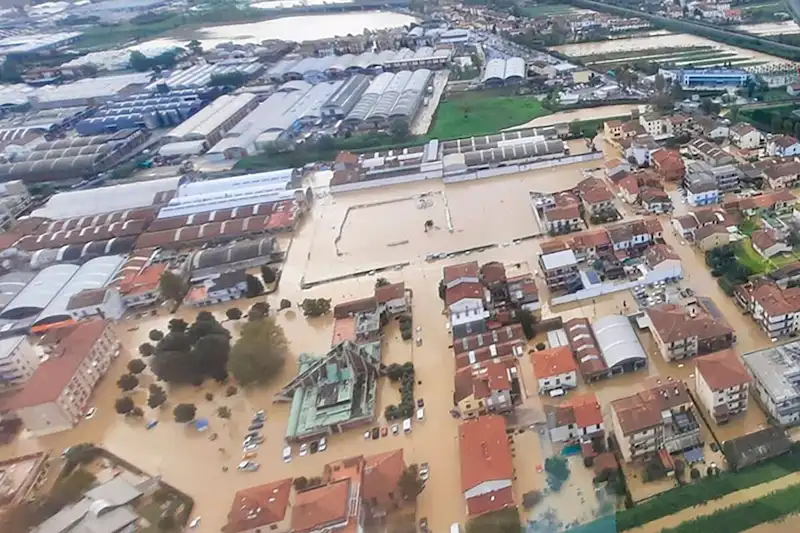


Italy is grappling with the devastating consequences of extreme weather events that have wreaked havoc across the country. In a year marked by severe floods and hurricanes, insurers in Italy are already facing claims amounting to over €3 billion ($3.2 billion) for the damage caused by the storms that hit Veneto and Emilia Romagna earlier this year, according to a recent analysis by Sole 24 Ore.
The extent of the damage is expected to rise further as Italy copes with the aftermath of recent deadly rains that have hit Tuscany and northern regions. These downpours have resulted in the loss of seven lives and caused an estimated €300 million worth of damage, as reported by the civil protection agency. In response to the crisis, the government has allocated approximately €5 million in aid, with plans for additional support.
Experts have attributed the extreme weather events in Tuscany to a concerning trend of "tropicalization." These storms followed Italy's hottest October on record, as highlighted by the agriculture association Coldiretti. Coldiretti has estimated that the flood-related damage has cost the country's agricultural sector more than €6 billion this year. The impact of the floods extends beyond the destruction of crops to storage facilities, where stocks of grain and olive oil have been compromised by flooding.
As Tuscany and central Italy remain on high alert for further severe weather, the full extent of the damage will only become clear in the coming days. Nevertheless, the impact of these events on major insurers has already had repercussions on their earnings and forecasts. For instance, shares of Assicurazioni Generali, one of Italy's largest insurers, experienced a decline in value in late October after it reported losses surpassing €840 million from natural catastrophes, surpassing its annual budget.
The financial toll from this year's extreme weather events in Italy is staggering. The funds required for recovery and rebuilding efforts will place a significant burden on both insurers and the government. Moreover, the long-term effects on Italy's agricultural sector, already hit hard by the floods, remain to be seen. As climate change continues to shape weather patterns and increase the frequency of extreme events, Italy and other nations must adapt and prepare for the economic and environmental challenges that lie ahead.