


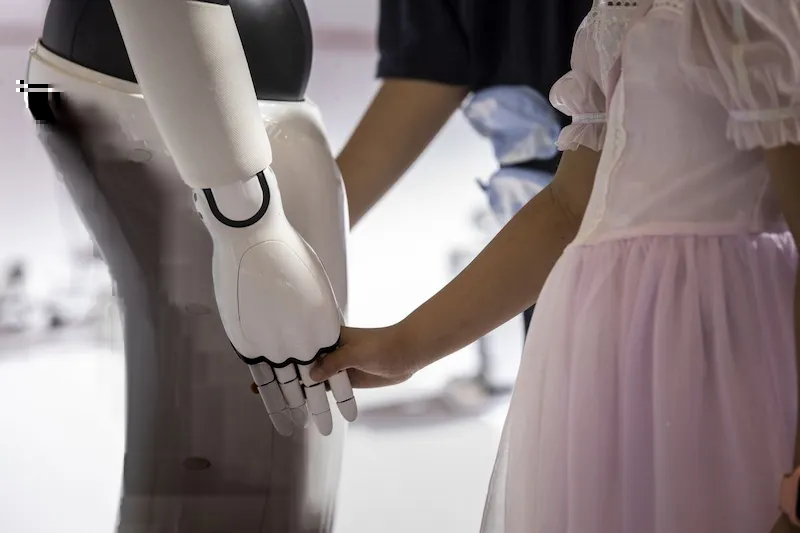


China has unveiled its ambitious plan to develop lifelike humanoid robots by 2025, as it seeks to establish itself as a global leader in cutting-edge technology. The Ministry of Industry and Information Technology has outlined a blueprint that includes nurturing young companies in the robotics field, setting industry standards, developing talent, and promoting international cooperation.
This move has created a surge of interest in Chinese robotics companies, with shares seeing a significant increase. The competition between the world's two largest economies, the United States and China, in the realm of chips and hardware has now expanded into the race for humanoid robots.
China, being the world's foremost electronics manufacturer, aims to achieve breakthroughs in environment sensing, motion control, and machine-to-human interaction capabilities within the next two years. The country is encouraging the use of artificial intelligence in robotics and has urged further research into the development of dexterous robot hands, arms, and feet.
Although the policy document lacks specific details, it clearly exhibits China's lofty ambitions in the field of humanoid robots. By 2027, China envisions that these robots will not only possess advanced cognitive abilities but also the capacity to learn and innovate. To support the manufacturing of humanoid robots, the government plans to establish a reliable industry supply chain system.
Humanoid robots are poised to revolutionize various industries by taking over tasks currently performed by humans. From picking groceries to working in hazardous environments, these robots would be able to handle a wide range of functions. While a number of American companies, such as Tesla and Boston Dynamics, are at the forefront of humanoid robot development, China is determined to catch up and assume a leadership role in this transformative technology.
The popularity and potential of humanoid robotics have already translated into significant market gains for Chinese companies. Shares of Ningbo Zhongda Leader Intelligent Transmission Co., Miracle Automation Engineering Co., Siasun Robot & Automation Co., and Shenzhen Sunwin Intelligent Co. all experienced a rapid surge in value following the announcement.
As China intensifies its focus on advancing humanoid robotics, the world eagerly anticipates the groundbreaking technologies that will emerge from this innovative powerhouse. With its massive manufacturing capabilities and growing investments in research and development, China's goal of producing lifelike humanoid robots by 2025 seems more plausible than ever.