


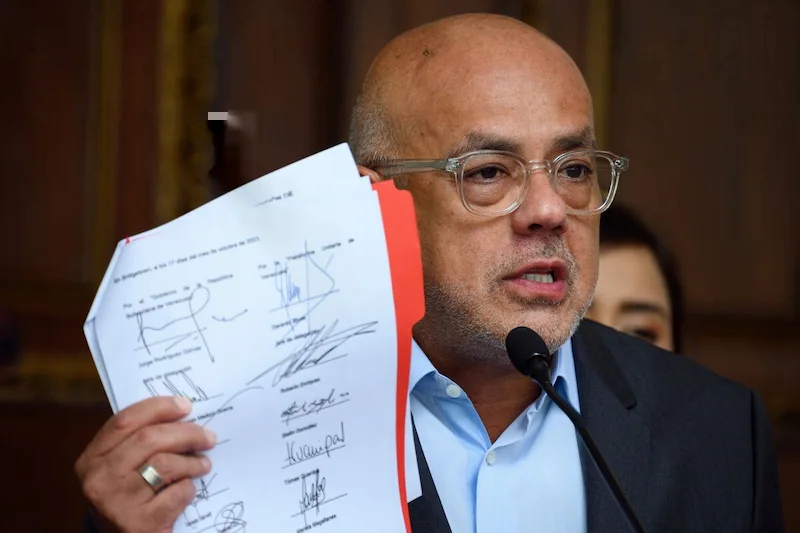


Venezuela's head of congress, Jorge Rodríguez, has announced that he will not invite European electoral observers for the country's upcoming elections next year. This decision comes in response to the European Union's (EU) recent decision to extend sanctions on fifty Venezuelan officials. Rodríguez expressed his belief that the EU could not be impartial and objective in overseeing the electoral process after imposing these sanctions.
It is important to note that this is not the first time Rodríguez has rejected observation from the EU. However, this is the first time since reaching an agreement with Venezuela's opposition for free and fair elections, in exchange for the easing of sanctions. As a close ally of President Nicolás Maduro, Rodríguez has made it clear that the EU will not be invited to oversee the 2024 presidential vote unless their sanctions are lifted.
Rodríguez argued that the EU's decision to extend sanctions goes against the agreement between the Venezuelan government and the opposition. Even though the EU shortened the review period of the measures from 12 months to 6 months, Rodríguez claimed that the extension itself was a violation of the agreement. As part of the agreement signed in October, Venezuela had pledged to invite five organizations, including the EU, to observe next year's elections.
The ongoing standoff between Venezuela and the EU has further complicated the electoral process and raised concerns about transparency. European electoral observers have been crucial in ensuring fair elections around the world, and their exclusion from Venezuela's electoral process could undermine its credibility. The EU has been vocal about the need for democratic reforms and respect for human rights in Venezuela, which has led to the imposition of sanctions on Venezuelan officials.
However, Rodríguez's rejection of the EU's involvement raises questions about the government's commitment to holding truly transparent elections. While the agreement with the opposition was a positive step towards inclusivity and fairness, the refusal to allow EU observers casts doubt on the intentions of the Venezuelan government.
The exclusion of the EU from overseeing the 2024 presidential vote may hinder international recognition of the election's legitimacy. Without the presence of an independent and impartial observer, concerns about possible electoral fraud or manipulation may arise. It is crucial for the Venezuelan government to address these concerns and work towards a transparent electoral process to regain the international community's trust.
In the coming months, Venezuela will face the challenge of organizing elections that are seen as credible and legitimate by both domestic and international actors. The exclusion of the EU, a respected international observer, from overseeing the process adds another layer of complexity to an already polarized political landscape. It remains to be seen how this decision will impact the electoral process and the overall democratic progress in Venezuela.