




Germany's Finance Minister Olaf Scholz has pledged to swiftly overhaul the country's finance planning after Germany's top court struck down a move to transfer €60 billion ($65.2 billion) into an off-budget fund for climate change. The Federal Constitutional Court ruled that reallocating funds originally earmarked for the Covid-19 pandemic violated borrowing restrictions. As a result, the €60 billion cannot be channeled into the Climate and Transformation Fund, which had been recently increased to €212 billion. The court ruling poses a significant challenge for the government and could trigger disputes on budget policies among the ruling coalition parties.
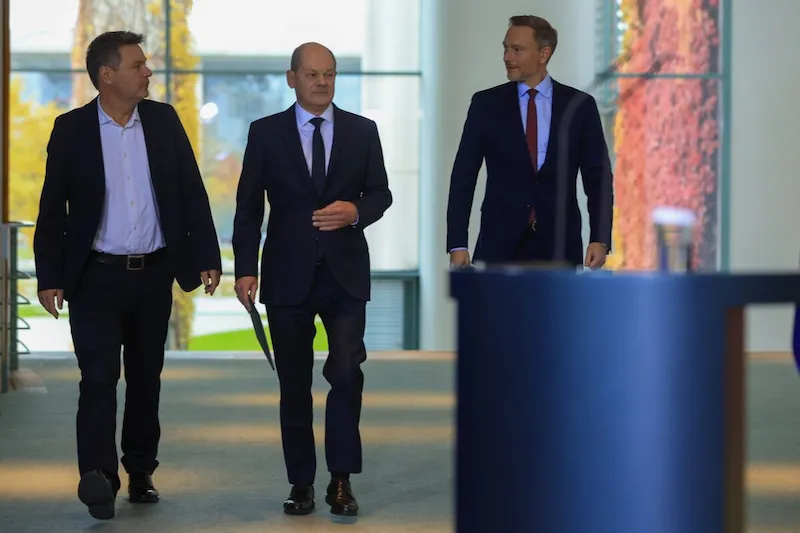
Acknowledging the impact on both federal and regional budgets, Scholz, along with Economy Minister Robert Habeck and Finance Minister Christian Lindner, announced immediate measures to address the ruling. The finance minister assured reporters that the parliamentary negotiations on the 2024 budget, expected to conclude this week, should not be affected. The unutilized credit authorizations worth €60 billion will be canceled, Lindner added.
The court ruling has raised concerns about the future of several projects, including the expansion of electromobility, heat pumps, and hydrogen infrastructure. The specifics of the affected initiatives are not yet clear as officials need time to assess the court's comprehensive ruling, which spans 62 pages. However, it is anticipated that spending on projects to promote energy transition and sustainable infrastructure may be disrupted.
The Climate and Transformation Fund, known as KTF, has been crucial in supporting Germany's transition, according to Habeck. The fund offers broad assistance to citizens and companies, including subsidies for building renovations, reducing energy prices, and expanding electric vehicle charging infrastructure. Habeck emphasized that all promised commitments will be honored, but new commitments will have to wait until the revised economic plan is prepared.
The court ruling is seen as a victory for the conservative opposition, which filed the suit to ensure the sustainability of Germany's public finances. The judgment serves as a reminder of the need to prioritize spending and scrutinize the government's debt-financed expenditure. Reiner Holznagel, the president of a German taxpayer lobby, expressed satisfaction with the court's decision to set "clear limits" on the government's expansive spending policy. He urged politicians to focus on measures that are most effective and important for society as a whole.
The KTF fund also allocates funds for investment in Germany's rail network and the expansion of semiconductor production. For instance, €10 billion in subsidies were planned for a new Intel Corp. plant in Magdeburg, located in the eastern part of the country. It remains unclear how these specific projects will be affected by the court ruling.
The government now faces the task of reevaluating its budget plans and adjusting expenditure accordingly. The court ruling has exposed divisions within the governing coalition and is likely to spur further debates on Germany's budget policies. As the government navigates this setback, it must strive to ensure a balanced approach that supports sustainable initiatives while addressing fiscal constraints.