


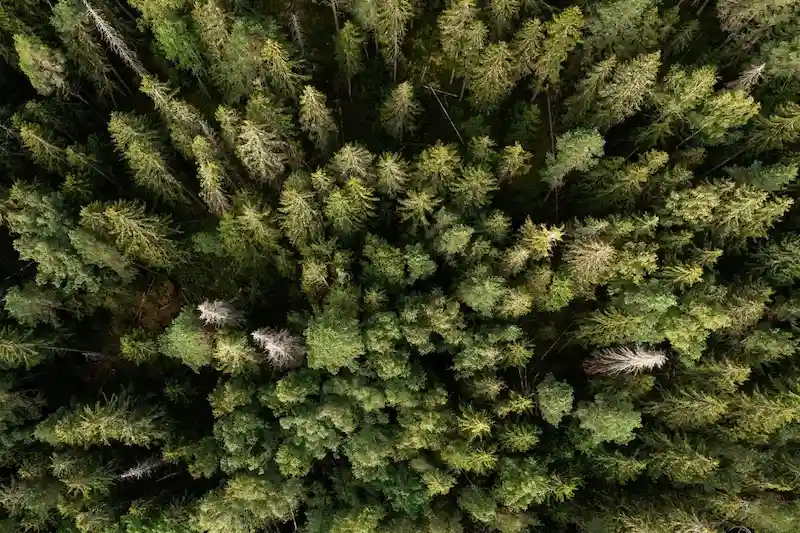


The European Union (EU) has announced its plans to employ satellite technology in an effort to combat deforestation, which has become increasingly critical in the fight against climate change. The EU's Executive Commission, the European Commission, intends to propose the formation of a forest-monitoring system using data from its Copernicus Sentinel satellites and other sources, to facilitate the creation of forest plans for the next five decades. This move comes as European forests play a pivotal role in absorbing significant amounts of carbon dioxide from both human-made sources and wildfires, making their protection crucial in achieving the EU's goal of net-zero emissions by 2050.
The utilization of satellites is expected to address the gaps in data gathering, specifically in measuring the impact of factors such as droughts and damage caused by pests like the bark beetle. These aerial observations will provide valuable insights into the state of forests, enabling the EU to better understand the consequences of climate change and human activities on forest health. Additionally, by monitoring forests on a regular basis, the EU can swiftly identify threats, prevent potential disasters, and take necessary actions to preserve forest ecosystems.
The draft document emphasizes the mounting stress on EU forests and wooded lands due to climate change and human activities, including direct and indirect use. The occurrence of hazards like wildfires, pest outbreaks, droughts, and heatwaves is anticipated to become more frequent and intense, often transcending national borders and wreaking havoc on vast regions. The devastating forest fires experienced by Greece, Spain, and Portugal in recent years emphasize the urgency of this matter. These catastrophic events not only threaten natural resources but also endanger inhabited regions, underlining the need for proactive monitoring and protection measures.
While the EU's initiative to monitor forests through satellite technology is commendable, challenges remain. The restoration of nature, including forests, has faced opposition due to fears that it may adversely affect food supplies in the region. Striking a balance between conservation efforts and agricultural interests is a complex task that requires careful consideration and collaboration among stakeholders. However, the EU recognizes the significance of forests and peatlands as natural carbon sinks and aims to mitigate potential conflicts by encouraging member states to develop long-term forest plans that cover the next 50 years.
By leveraging the capabilities of satellite imaging and data analysis, the EU is stepping up its commitment to combating deforestation and protecting vital ecosystems. The proposed forest-monitoring system is anticipated to provide crucial information to assess the impact of climate change, detect emerging threats, and implement timely measures to safeguard forests. Ultimately, this initiative plays a crucial role in the EU's ambitious endeavors towards achieving a sustainable and carbon-neutral future.