


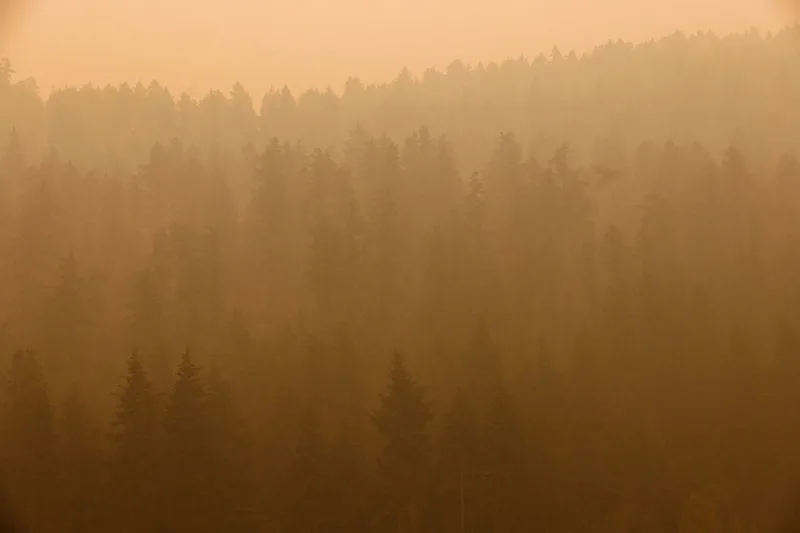


Canada continues to battle an unprecedented number of wildfires, as this year proves to be the most devastating on record. Currently, there are still 330 wildfires raging across the country, with a staggering 85 of them being completely out of control, according to the Canadian Forest Fire Centre. Since the beginning of 2023, a staggering number of 6,647 fires have consumed approximately 18.5 million hectares of land, equivalent to the size of North Dakota.
Experts attribute Canada's year of relentless fires to an alarming lack of snowfall and widespread drought experienced in many parts of the country last winter. Disturbingly, there are growing concerns that the upcoming winter may bring about a repeat of this situation. Paul Pastelok, a long-range forecaster at AccuWeather Inc., warns that as winter 2023-2024 unfolds, central and eastern Canada might find themselves in the second consecutive year of a snow drought, potentially exacerbating the wildfire crisis. This not only has implications for Canada but also for the entire continent, as it could result in milder weather patterns while simultaneously fueling long-term drought conditions.
As of the end of October, significant portions of southern Canada were still entrenched in severe drought, with southern Alberta and Saskatchewan being the hardest hit areas, according to the Canadian Drought Monitor. The impact of this prolonged dry spell has been devastating, with record-breaking fires raging for months and smoke blanketing skies as far as New York and other major cities in the United States.
In addition to Canada's fire woes, other regions worldwide are grappling with extreme weather conditions. In the United States, an elevated risk of fire weather persists along the border of North Carolina and Tennessee. Red flag warnings have been issued in counties on both sides of the border as strong, dry winds batter the area through Tuesday. Additionally, an enhanced risk of severe thunderstorms looms over Louisiana and Mississippi on Monday. The threat extends to cities such as Houston and New Orleans, with a slight to marginal risk of damaging straight-line winds, hail, and tornadoes.
Meanwhile, India is experiencing heavy rainfall in Tamil Nadu and the Andaman and Nicobar Islands. Meteorologists predict that these torrential rains will persist throughout the week, particularly in southeastern parts of the country. This prolonged precipitation could have a significant impact on local communities and infrastructure.
In Russia, approximately 44,000 people remain without electricity following intense windstorms in Siberia. The Deputy Energy Minister, Evgeny Grabchak, reports that efforts are underway to restore power to affected areas as quickly as possible.
As the world grapples with these extreme weather events, it becomes increasingly evident that climate change is intensifying, with devastating consequences for ecosystems, communities, and livelihoods. Urgent action is necessary to mitigate and adapt to these new realities, both on a local and a global scale.