


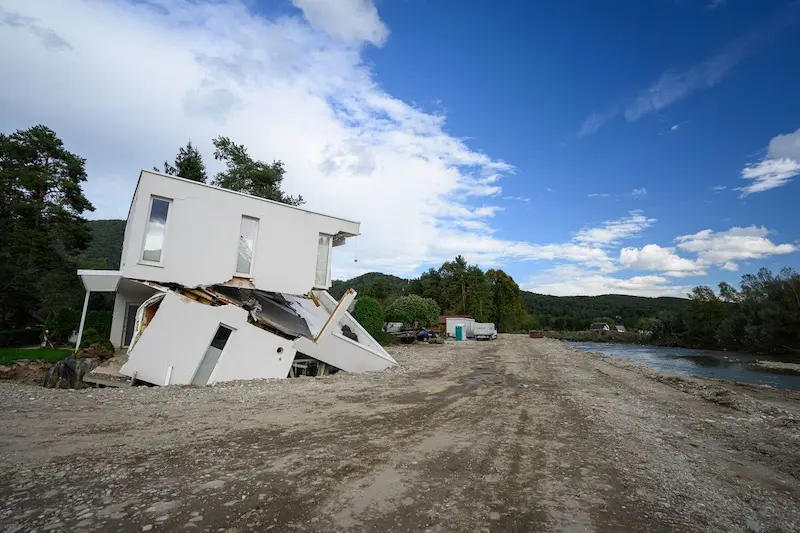


Slovenia's government has given the green light to a new tax on banks and higher levies on companies in order to finance post-disaster reconstruction projects. The recent severe floods in August caused extensive damage to businesses, homes, and infrastructure, resulting in significant economic losses and the loss of lives. With the estimated cost of rebuilding reaching up to €10 billion ($10.9 billion), approximately 18% of Slovenia's annual economic output, the government faces mounting pressure to support the reconstruction efforts.
The proposed legislation, which still requires parliamentary approval, includes a 0.2% tax on total banking assets. This move aligns Slovenia with several other European Union member states that have resorted to special taxes on banks to address budget shortfalls, particularly when banks are posting record profits. It is anticipated that this banking tax will generate around €100 million annually.
Additionally, the government plans to raise the corporate tax rate from 19% to 22%. These measures are intended to remain in effect for the next five years, with projected revenues of approximately €1.5 billion by 2029. However, the primary source of financing for the upcoming year and beyond will be government borrowing, according to Finance Minister Klemen Bostjancic.
Prime Minister Robert Golob's administration has faced significant challenges recently, leading to plummeting approval ratings since assuming power last year. Accusations of interfering in police affairs, a failed reshuffling of the cabinet, internal party conflicts, and public disappointment over the coalition's inability to enact reforms have all contributed to this decline in public support.
Ultimately, the new taxes and levies implemented by the Slovenian government aim to provide funding for the extensive reconstruction required after the devastating floods. However, the government will heavily rely on borrowing as the main financial resource in the coming years. The allocation of resources towards reconstruction projects will be vital to restoring Slovenia's economy and improving public sentiment towards the government.