


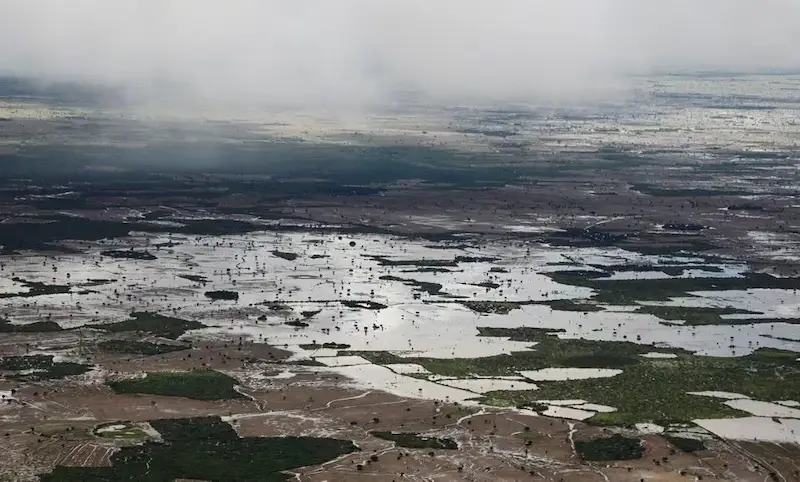


The death toll from the devastating floods caused by heavy rains in Somalia has risen to 96, according to the state news agency SONNA. The agency confirmed the number of casualties, as reported by Mahamuud Moallim, the head of Somalia's disaster management agency. These floods are a result of the ongoing heavy rains that have been affecting the region since October, driven by the El Nino and Indian Ocean Dipole weather patterns.
The effects of the flooding have been disastrous, with the situation being described as the worst in decades. Approximately 700,000 people have been displaced in Somalia alone, as reported by the United Nations. The relentless rainfall has triggered severe flooding throughout the country, worsening the already dire humanitarian crisis caused by years of conflict and insurgency.
Neighboring Kenya has also been severely impacted by the floods, with the death toll reaching 76 according to the Kenyan Red Cross. The floods in Kenya have resulted in extensive displacement and destruction of infrastructure such as roads and bridges. Additionally, many residents are now facing a shortage of essential supplies such as shelter, clean drinking water, and food, as highlighted by Médecins Sans Frontières (MSF).
The El Nino and Indian Ocean Dipole weather phenomena have disrupted normal climate patterns, leading to above-average rainfall in the region. These climate patterns influence ocean surface temperatures, causing significant fluctuations in weather conditions. The heavy rains and resulting floods have wreaked havoc on communities across East and the Horn of Africa.
Emergency response efforts are underway to provide immediate relief to those affected by the floods. Humanitarian organizations and government agencies are working tirelessly to evacuate vulnerable populations, provide temporary shelter, and distribute essential supplies. However, the scale of the disaster requires continued assistance and support from the international community.
As the region continues to grapple with the devastating consequences of these floods, efforts to address the long-term impacts and build resilience against future disasters must also be prioritized. Climate change projections indicate that extreme weather events, including heavy rainfall and flooding, are likely to increase in frequency and intensity in the coming years. Therefore, investing in sustainable infrastructure, early warning systems, and disaster preparedness measures becomes crucial to mitigate the impact of such disasters in the future.
In the face of this ongoing crisis, solidarity, and international cooperation are paramount. It is imperative for nations, organizations, and individuals to come together to support the affected communities and work towards long-term solutions that can enhance resilience and help prevent such catastrophic events from causing further loss of life and displacement.