


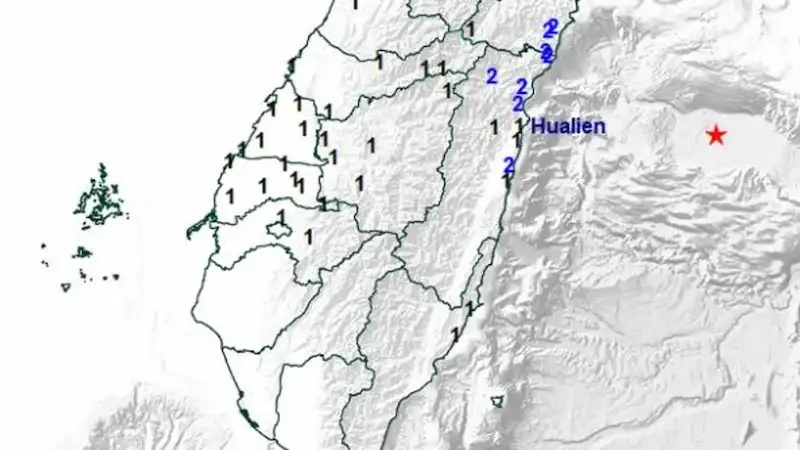


A moderate earthquake with a magnitude of 5.4 struck off the east coast of Taiwan on Sunday, according to the island's weather bureau. While the tremors were strong enough to briefly shake buildings in the capital city of Taipei, no reports of significant damage have emerged thus far.
The earthquake's epicenter was situated in the ocean off Hualien county, at a depth of approximately 22.4 kilometers (14 miles), as confirmed by the weather bureau. As a region located near the convergence of two tectonic plates, Taiwan frequently experiences seismic activity.
Despite the relatively mild nature of this recent tremor, it serves as a reminder of Taiwan's vulnerability to earthquakes. Tragically, the country has endured devastating quakes in the past. In 2016, a powerful earthquake in southern Taiwan claimed the lives of over 100 people. Additionally, a catastrophic magnitude 7.3 earthquake in 1999 resulted in the loss of more than 2,000 lives.
Efforts in recent years have focused on improving Taiwan's infrastructure to withstand seismic events, including stringent building codes and enhanced disaster preparedness. While these measures have undoubtedly contributed towards minimizing the impact of earthquakes, the risk of subsequent tremors remains an ever-present concern.
As seismic activity continues to pose a threat to Taiwan, authorities and residents alike must remain vigilant and ensure the implementation of robust safety measures. The country's geographical location demands the utmost preparedness to mitigate potential consequences that may result from future earthquakes.