


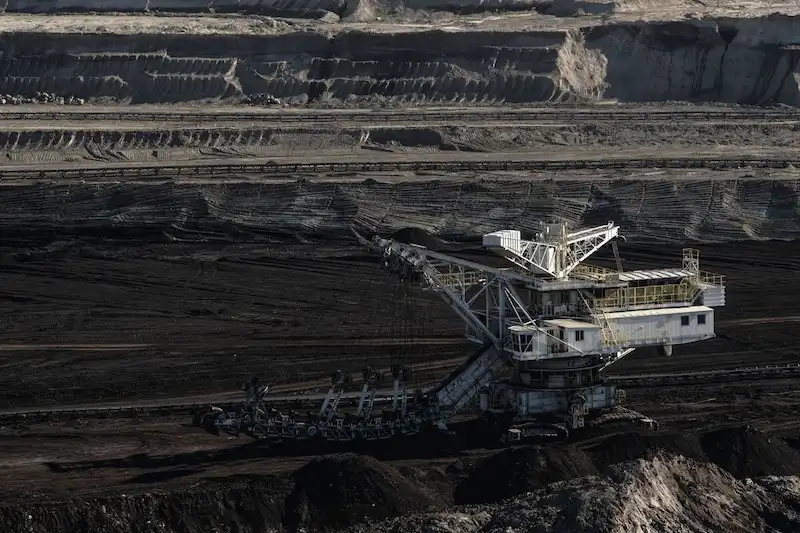


Poland's incoming government is set to accelerate the country's transition away from coal and ramp up its renewable energy sources, according to Paulina Hennig-Kloska, a potential climate minister. The ruling coalition, led by the Civic Platform party, envisions renewable energy accounting for 68% of the country's energy production, with a ban on coal used for household heating beyond 2030. The smaller ally, Polska 2050, is even more ambitious, aiming to completely phase out coal by 2040 and achieve carbon neutrality by 2050.
This renewable energy push stands in contrast to the outgoing Law and Justice party's stance, which criticized the European Union's rapid pursuit of climate neutrality and challenged certain Green Deal regulations. The previous government wanted to retain coal until 2049 and have renewables contribute less than half of the power production by 2030.
Poland, currently the EU's most coal-reliant member, relies on fossil fuels for approximately 70% of its electricity generation. As carbon dioxide emissions increasingly impact energy prices, the country has begun investing in offshore wind and nuclear power to replace aging coal-fired plants. However, significant capacity additions are not expected until the next decade. The incoming government aims to expedite this process and affirms its commitment to renewables and nuclear energy in order to reduce emissions.
In addition to its renewable energy goals, the new administration also prioritizes protecting consumers from high energy prices. The measures required to achieve these objectives are estimated to cost billions of zlotys. The coalition intends to introduce a relevant bill in parliament as early as Tuesday.
Other urgent decisions awaiting the new government include facilitating investment in onshore wind energy and reinstating mandatory regulations for energy companies to sell electricity through an exchange. The pro-EU opposition parties, who emerged victorious in the October 15 elections, are expected to take office by mid-December.
The incoming coalition will also need to address the unfinished business of divesting coal assets from state-controlled power utilities. The previous government's plan involved consolidating coal-fired power plants into a separate entity to facilitate financing for energy companies. While Hennig-Kloska supports the idea of asset divestment, she opposes the transfer of all assets into a single state entity known as NABE. She argues that as coal units become a larger problem in the future, the cost of coal-generated electricity will continue to rise. However, she believes the current NABE project should not be pursued, as it would create a new monopoly.