


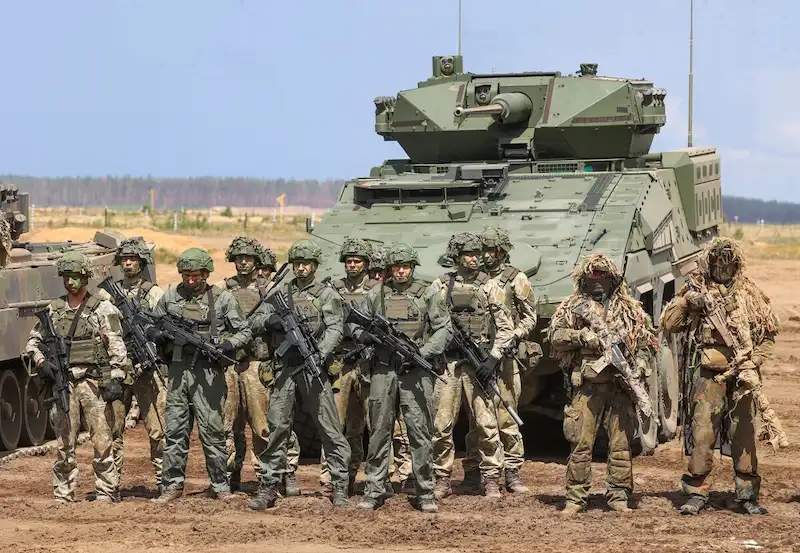


Germany and Lithuania have come together to solidify their commitment to reinforce NATO's defenses on the eastern flank of the alliance. In a significant move, the two countries have signed a comprehensive plan to station a permanent brigade of approximately 4,800 German troops in Lithuania over the next four years. The roadmap outlining the deployment strategy was approved by German Defense Minister Boris Pistorius and his Lithuanian counterpart, Arvydas Anusauskas, during their meeting in Vilnius on Monday.
This agreement marks a significant milestone in the German military's operations as it will be the first permanent foreign mission of such magnitude. The deployment of troops is expected to commence next year, gradually increasing until a full-scale brigade is established by 2027. By stationing a considerable number of troops in Lithuania, Germany aims to address the evolving security challenges in the region and send a clear message to those who endanger peace and stability in Europe.
The decision to station a brigade of approximately 4,800 German troops in Lithuania comes in response to the growing concerns about Russian aggression and the ongoing conflict in Ukraine. Lithuania, being a Baltic nation situated in close proximity to Russia, has been advocating for a stronger NATO presence in the region to deter any potential threats. Germany's commitment to reinforce NATO's eastern flank aligns with these concerns and demonstrates its acknowledgment of the shifting realities of security policy in Europe.
With this significant development, Germany joins other NATO member states in bolstering their defense posture in Eastern Europe. This move follows the 2016 decision by NATO to enhance its presence in the region by increasing the rotational deployments of troops as a response to Russia's annexation of Crimea. The establishment of a permanent German brigade in Lithuania further strengthens NATO's collective defense capabilities and serves as a deterrent against any potential aggression.
The deployment of German troops to Lithuania not only reflects the shared commitment of Germany and Lithuania towards NATO's collective defense, but it also illustrates the deepening bilateral relations between the two countries. This partnership signifies the willingness of Germany to actively contribute to regional security and demonstrates its solidarity with Lithuania and other Baltic states.
Overall, it is evident that the joint plan developed by Germany and Lithuania for the stationing of a permanent German brigade in Lithuania represents a significant step forward in reinforcing NATO's defenses on the eastern flank. This crucial decision enhances the overall security of the region, sending a resolute message to those who may pose a threat to peace and stability in Europe.