


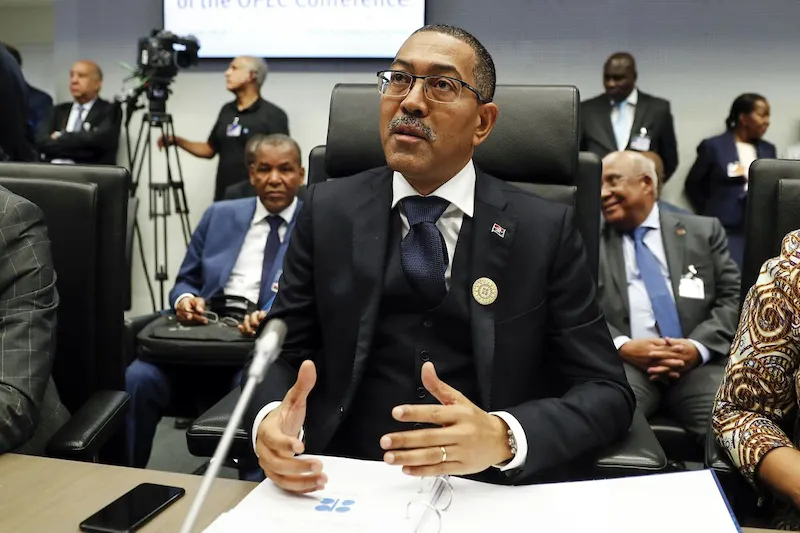


Angola announced its decision to leave the Organization of Petroleum Exporting Countries (OPEC) after 16 years of membership. The move comes as a result of a dispute over oil production quotas, as Angola rejected a reduced output limit imposed by OPEC in light of the country's declining capacity. While the decision to leave might raise concerns about OPEC's unity, it is not expected to have a significant impact on production forecasts, as Angola is already producing at full capacity rather than adhering to OPEC+ quotas.
Angola's departure will reduce OPEC's membership to 12 nations. Led by Saudi Arabia, the organization and its allies have been curbing oil supplies to support global prices. However, the announcement of Angola's withdrawal caused Brent futures to slip 1.5% and trade below $79 per barrel, reflecting concerns about cracks in OPEC's unity.
Angola's Minister of Mineral Resources, Diamantino Azevedo, said that the country's role in the organization was no longer deemed relevant. He further stated that the decision to withdraw was not taken lightly and that the time had come for Angola to leave OPEC.
The clash between Angola and OPEC's leadership first came to light in June when a deal awarded a higher production target to the United Arab Emirates. This forced Angola to accept a reduced limit for 2024, which acknowledged its declining oil production capabilities. Bloomberg data shows that Angola's oil output has decreased by about 40% over the past eight years, currently standing at approximately 1.14 million barrels a day. The country has failed to invest adequately in its aging, deepwater oil fields, contributing to this decline.
The dispute between Angola and OPEC escalated last month, leading to a four-day delay in OPEC's ministerial meeting. Angola was promised a review by external consultants, but the outcome was even worse than expected, as OPEC imposed an even lower quota of 1.1 million barrels a day, which is below Angola's current output.
Following the meeting, Angola's representative to OPEC, Estevao Pedro, confirmed that the country rejected the new quota and would continue to produce as much as possible. Finally, on Thursday, Angola officially announced its withdrawal, with Minister Azevedo stating that when participating in an organization like OPEC, the goal is to contribute and align with their own interests. However, when this no longer occurs, the country becomes redundant, leading to the decision to withdraw.
Throughout recent years, several other countries have left OPEC for various reasons, including Qatar, Indonesia, and most recently, Ecuador. This trend, combined with a decline in OPEC supplies and increased production from non-OPEC nations like the United States, has hampered the organization's efforts to support and stabilize global oil prices.
OPEC has not yet provided an official statement in response to Angola's withdrawal. While the departure may raise concerns about the group's cohesion, analysts believe it will not significantly impact overall production forecasts.