


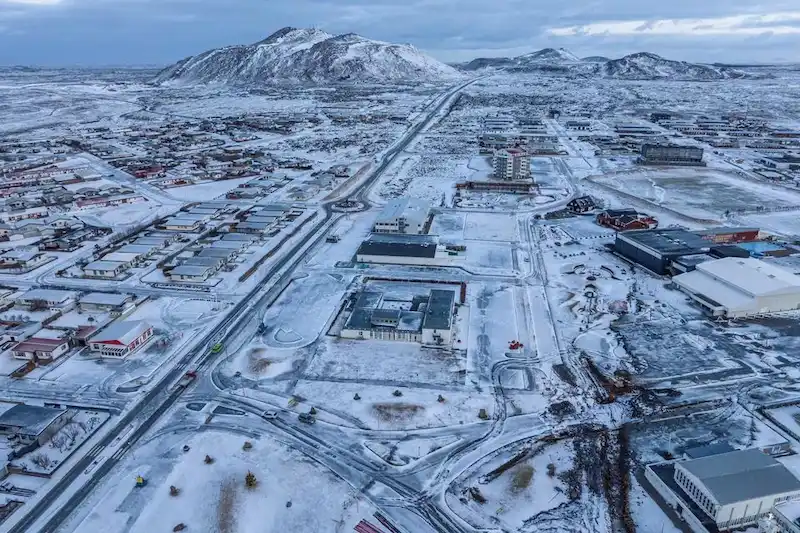


Iceland's national police commissioner has decided to downgrade the threat level posed by the recent volcano eruption, according to the country's Civil Protection Agency. The eruption, which occurred in Southwestern Iceland earlier this week, followed a series of strong seismic activities that had forced the complete evacuation of a town with around 4,000 residents.
In a statement, the Civil Protection authority announced that there is currently no visible activity in the volcano, leading to their decision to lower the threat level from "emergency" to "danger". This news brings a sigh of relief to the affected region, as it indicates that the immediate danger has subsided.
However, experts at Iceland's meteorological office have issued a cautionary message. They warned that there is an increasing likelihood of a volcanic eruption in the vicinity of the Svartsengi volcanic system. The accumulation of magma in the area indicates that another dike intrusion and subsequent eruption could occur in the near future. While the threat level has been downgraded, it is important for officials and residents to remain vigilant and prepared for any potential developments.
It is worth noting that Iceland has a long history of volcanic activity due to its location on the Mid-Atlantic Ridge, where tectonic plates meet and diverge. This geological phenomenon often results in the creation of volcanic systems, which periodically erupt and shape the landscape. While the recent eruption may have receded for now, the potential for further volcanic activity remains a concern for authorities monitoring the situation.
The downgrading of the threat level provides some respite to the affected communities, allowing them to gradually resume their daily lives. However, it is essential for everyone to stay informed and follow the guidance provided by the relevant authorities in order to ensure their safety in case of any future volcanic events.
As Iceland continues to monitor the situation closely, efforts are underway to assess the impact of the recent eruption and support those affected by the evacuations. The government is collaborating with local agencies and international partners to mitigate any potential risks and implement necessary measures to protect the affected population.
In conclusion, while the threat level associated with the recent volcano eruption in Iceland has been downgraded, the situation remains closely monitored due to continuing magma accumulation. It is vital for residents and authorities to remain vigilant and prepared for any potential developments, ensuring the safety and well-being of all individuals in the affected region.