


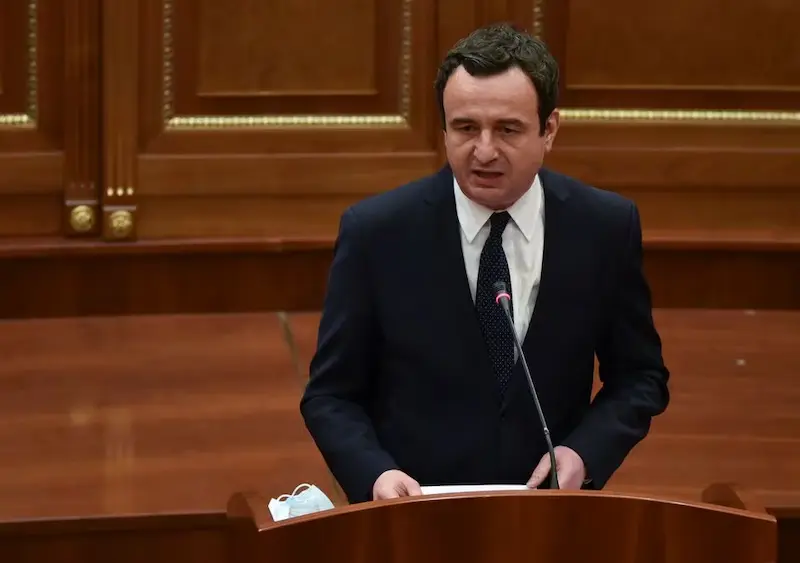


Kosovo's Prime Minister, Albin Kurti, has made a serious accusation, claiming that armed men supported by Serbian security agencies are being trained to launch new attacks in his country. This allegation comes after a deadly assault in September that left four people dead. Serbia, however, vehemently denies any involvement in planning such attacks.
The incident in question occurred on September 24, when a group of 80 armed men launched an attack on Kosovo police in the village of Banjska, near the border with Serbia. The ensuing gun battle resulted in the deaths of one police officer and three of the assailants.
During a news conference, Prime Minister Kurti revealed that a prominent Kosovo Serb politician, Milan Radoicic, who openly admitted taking part in the September attack, is now reportedly planning further assaults. Kurti alleged that Radoicic is holding regular meetings with senior officials of the Serbian secret service, known as BIA.
Serbia's government office for Kosovo, led by Petar Petkovic, immediately refuted the Prime Minister's claims. Petkovic stated categorically that Kurti's accusations were false and that Belgrade had no plans to launch an attack.
Meanwhile, Kosovo's prosecution has already issued arrest warrants for Radoicic and 30 others believed to be hiding in Serbia. Previously, Kosovo had accused Serbia of providing financial and practical support to Radoicic and his group, which was also denied by the Serbian authorities.
Kosovo, with an ethnic Albanian majority, declared independence from Serbia in 2008 after a period of guerrilla uprising and NATO intervention in 1999. Around five percent of Kosovo's population comprises ethnic Serbs, with half of them living in the north and refusing to recognize Kosovo's independence, instead considering Belgrade as their capital. This has often led to clashes between the Kosovo police, international peacekeepers, and the Serbian community.
In response to the escalating tensions, NATO has recently deployed an additional 1,000 troops to the region, raising the total number of peacekeepers to 4,500 from 27 countries. The goal of this increased presence is to maintain stability, prevent further violence, and protect the communities in Kosovo. The situation remains tense as both sides continue to trade accusations and strive for a resolution to the ongoing conflict.