


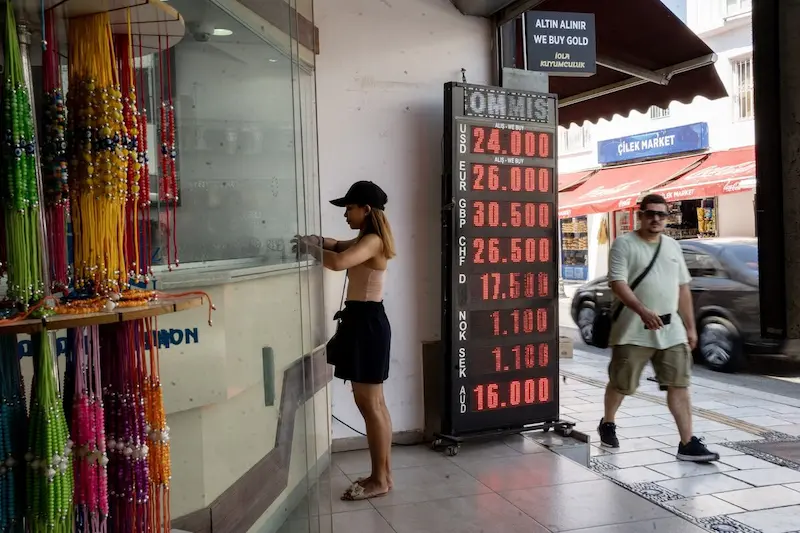


Turkey is set to end its FX-protected deposit program in the coming year, according to Treasury and Finance Minister Mehmet Simsek. The program, introduced in December 2021, aimed to reduce dollarization in deposits and strengthen the Turkish currency. It guaranteed returns on lira deposits to compensate for any exchange-rate losses, encouraging savings in the Turkish lira. However, the program will be terminated as part of the country's efforts towards economic normalization and fiscal discipline.
Minister Simsek expressed his optimism for the year 2024, stating that it will mark the beginning of annual inflation decline, increased reserve adequacy, the end of the FX-protected system, and a sustainable improvement in the current account. He emphasized that the foundation of sustainable high growth will be further reinforced during this period.
The FX-protected deposit program, also known as KKM, was initially implemented to help support the Turkish lira when it faced pressure due to interest rate cuts in a high inflation environment. President Recep Tayyip Erdogan's administration pursued unorthodox economic measures, including ultra-loose monetary policy. However, with the introduction of a new economic team led by Simsek and Central Bank Governor Hafize Gaye Erkan, the focus shifted towards attracting foreign investors and normalizing the economy.
In their endeavor for policy normalization, the new economic team reversed certain regulations and significantly raised Turkey's key interest rate. The gradual reduction in FX-protected accounts was one of their goals. The termination of the program was anticipated due to the potential pressure it could exert on the lira and the central bank's reserves if a large number of savers chose to convert back to dollars.
Minister Simsek had already signaled an exit from the KKM program, stating in a previous interview that it could be achieved without any additional incentives. He mentioned that tax exemptions currently offered for these accounts serve as the primary incentive, which will be assessed next year. Thus, the exit process from the FX-protected deposit program has been progressing successfully.
As part of this exit process, Turkish banks will no longer provide FX-protected lira deposit accounts for savings held in regular lira accounts starting from January 1st. However, banks will continue to offer FX-protected accounts for deposits in foreign currencies.
Data from the banking regulator indicates that total deposits in Turkey's FX-protected accounts decreased by 30.4 billion liras ($1.03 billion) to 2.65 trillion liras in the week ending December 22nd. This decline demonstrates the ongoing transition away from the program.
The decision to end the FX-protected deposit program reflects Turkey's commitment to implementing sound economic policies and enhancing fiscal discipline. The move is part of the government's broader efforts to strengthen the Turkish lira, improve the current account, and establish a foundation for sustainable high growth in the coming years.