


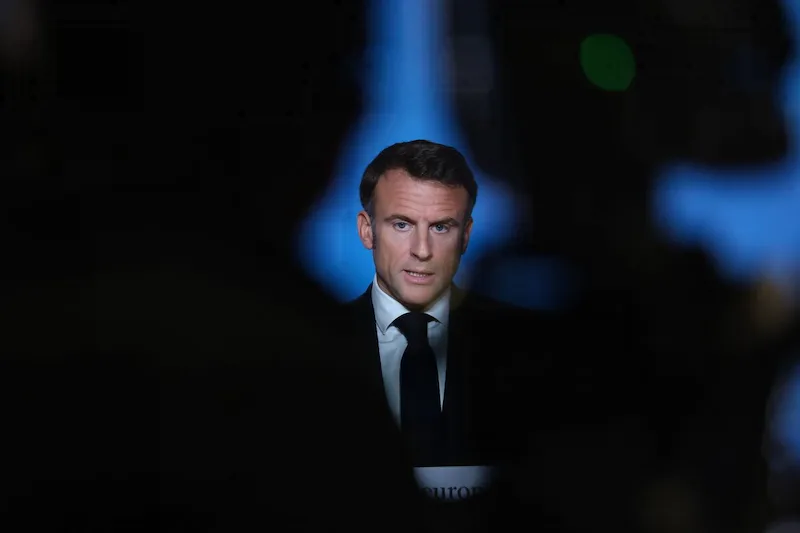


French President Emmanuel Macron outlined his plans for 2024 in his traditional New Year's Eve address, expressing his determination to drive economic "rearmament" in order to achieve full employment by 2027. Macron proudly cited recent reforms, including increases in retirement age and the passing of an immigration bill, which faced opposition. He also revealed that major initiatives in nuclear power, artificial intelligence, and transportation will be launched in the coming year.
Macron acknowledged the widespread skepticism surrounding his presidency but rebuffed it by emphasizing the progress made in implementing his agenda. He credited successful reforms as evidence that his policies were not futile, contrary to the predictions of skeptics. In doing so, he aimed to restore public confidence by highlighting the positive impact of his actions.
The French President unveiled his vision for an economic "rearmament" in multiple sectors. Macron stressed the importance of industrial, technological, and scientific advancements to achieve his full employment goal. He expressed the need for continuous innovation and also emphasized attracting new companies to invest and create more job opportunities within France. By prioritizing sectors such as nuclear power, artificial intelligence, and transportation, Macron aims to revitalize the economy and stimulate job growth.
While Macron celebrated his accomplishments, challenges lie ahead. Slow economic growth threatens to undermine efforts to create jobs and repair public finances. The passage of the immigration bill, thanks to conservative support, further strained the unity within Macron's party and its allies. Analysts suggest that a cabinet reshuffle may be imminent to address these fractures. Macron must navigate these political challenges if he hopes to maintain momentum and implement his desired reforms effectively.
In addition to domestic concerns, Macron also acknowledged the upcoming European elections scheduled for June. He characterized these elections as a critical choice between the continuation of European integration or its stagnation. Polls indicate that Marine Le Pen's far-right National Rally party leads in voting intentions for the French electorate. Macron's mention of this pivotal election suggests his recognition of its significance and highlights the need to combat rising right-wing populist sentiments in France.
As Macron embarks on 2024, he faces a delicate balance of enacting reforms, revitalizing the economy, and countering political opposition. The success of his economic "rearmament" plan and goal of achieving full employment hinges on his ability to address mounting challenges effectively. Only time will tell whether Macron can navigate these hurdles and secure a prosperous future for France.