


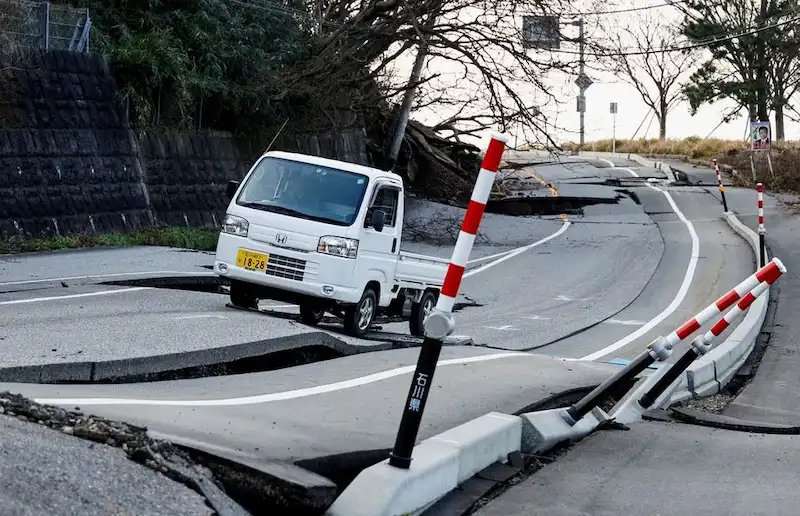


The death toll from the powerful New Year's Day earthquake in Japan has climbed to 110 as rescue workers continue their search for survivors amidst the rubble of collapsed buildings. The magnitude 7.6 quake struck the country's west coast, causing widespread destruction and cutting off power to around 22,000 households in the Hokuriku region. However, heavy rain hampered rescue efforts, leaving more than 30,000 evacuees waiting for desperately needed aid.
According to the Ishikawa government website, the number of confirmed fatalities rose from 94 to 110 on Saturday, with over 200 individuals still missing. This makes it the deadliest earthquake in almost eight years. Prime Minister Fumio Kishida expressed his deep concern as the death toll surpassed 100, indicating the extent of the damage caused by the disaster.
Efforts are underway to restore the trunk roads that were damaged by the quake in order to facilitate the delivery of rescue and relief supplies. The Self-Defence Forces of Japan plans to augment the number of rescue personnel by 400, bringing the total to 5,400. In addition to the road disruptions, mudslides, boulders, and cracks on the roads have isolated numerous remote communities in Ishikawa prefecture.
Helicopters from the Self-Defence Forces played a crucial role in the evacuation of residents in areas like Wajima's Fukamimachi district, where at least 14 people were airlifted to safety. Meanwhile, many displaced individuals have taken refuge in evacuation centers, where they queue for food, water, and other basic necessities. Some residents, however, have opted to sleep in their cars, seeking solace away from larger crowds.
Yutaka Obayashi, whose home was destroyed by the quakes, explained his decision to sleep in his vehicle. He expressed discomfort living in close proximity to many people and preferred the comfort and isolation of his car. While the community rallies to provide support, individuals like Obayashi are still uncertain about the road to recovery.
As the region grapples with the aftermath of the quake, weather officials have issued warnings of heavy snowfall in the coming days. Such conditions could trigger secondary disasters like landslides, adding to the challenges faced by rescue and relief operations. Additionally, seismic activity persists, with a magnitude 5 earthquake striking the town of Anamizu early on Saturday.
Priest Ayuko Noto of Wajima's Juzo shrine has made the decision to sleep in their family car along with their loved ones, despite their house remaining intact. Their aim is to protect themselves from any potential major aftershocks or tsunami waves. However, the uncertainty surrounding the ongoing seismic activity leaves Noto unable to predict how long they will continue with this arrangement.
As Japan's recovery efforts continue, the nation remains resilient, demonstrating unity and resilience in the face of adversity. International aid and support are expected to play a crucial role in helping the affected communities rebuild and find solace, as they navigate through the long road to recovery following this devastating earthquake.