


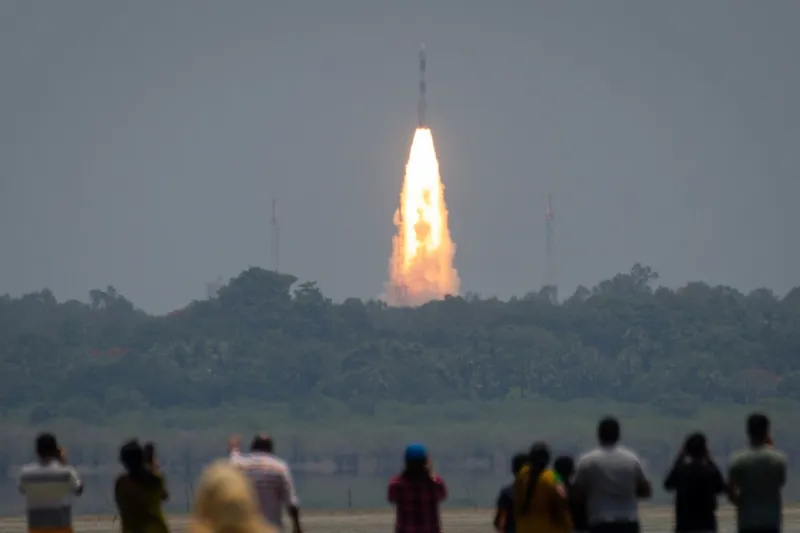


India's solar observation mission, Aditya-L1, has successfully reached its destination, marking another major achievement in the country's space endeavors. The spacecraft, which was launched in September last year, has reached a point approximately 1.5 million kilometers away from Earth, providing an opportunity to delve deep into the workings of the sun. This remarkable feat comes after India successfully landed a craft near the moon's south pole in 2023, becoming the first country to achieve this milestone.
India's space agency, the Indian Space Research Organisation (ISRO), announced the spacecraft's arrival at its designated location, which is only a fraction of the immense 150 million kilometer distance between Earth and the sun. Aditya-L1 is now poised to embark on a crucial mission, studying and analyzing the intricacies of the sun's activities, shedding light on its magnetic field, solar emissions, and other vital data.
This achievement paves the way for further advancements in India's space program, potentially giving a boost to the popularity of Prime Minister Narendra Modi as he seeks a third term in office through upcoming federal elections. The Aditya-L1 mission is just one part of ISRO's ambitious projects, which includes plans for a human spaceflight program aimed at launching Indian astronauts into orbit for the first time by 2025. These efforts demonstrate India's commitment to exploring and pushing the boundaries of space science and technology.
Prime Minister Narendra Modi applauded the dedication and perseverance of the nation's scientists in realizing this complex mission. Through social media, he expressed his admiration for their remarkable achievement and reaffirmed India's commitment to pushing the frontiers of scientific knowledge for the betterment of humanity. This significant milestone is not only a source of national pride but also showcases India's capabilities and potential as a major player in the global space race.
The Aditya-L1 mission holds immense scientific value as it aims to provide crucial insights into the sun's behavior and its impact on Earth. By studying the sun's magnetic field, solar flares, and other phenomena, scientists can better understand the solar dynamics that affect our planet. This knowledge can be instrumental in improving space weather forecasts, which have vital implications for satellite communications, power grids, and other technological systems on Earth.
With its successful arrival at its destination, Aditya-L1 has set the stage for groundbreaking discoveries and a deeper understanding of our closest star. India's achievements in space exploration continue to inspire and captivate both its citizens and the global scientific community. As the country forges ahead, its space program is poised to play a significant role in shaping the future of space exploration and unlocking the secrets of the universe.