


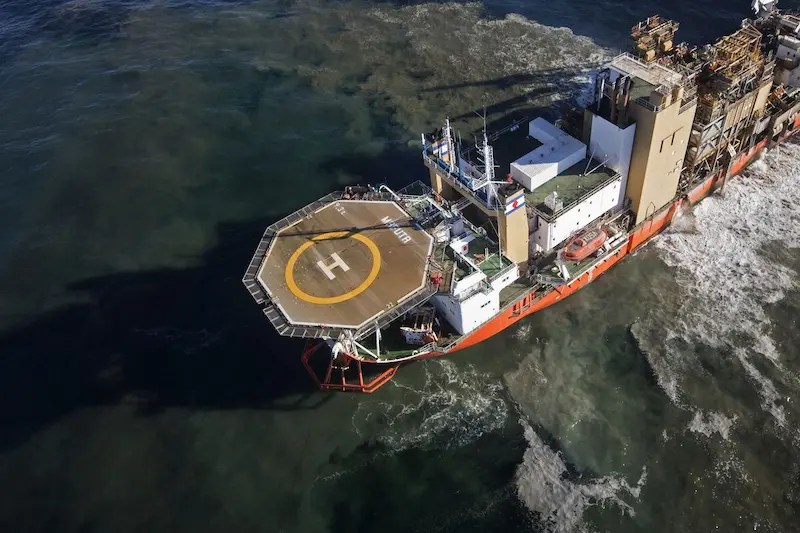


Norway's parliament has given its approval for commercial mineral exploration in the country's Arctic waters, despite opposition from environmental and fishing groups. The decision was made on Tuesday, following a cross-party agreement reached last month to gradually open up the process. The growing demand for minerals essential for electric car batteries and solar panels has led to increased global interest in deep sea mining.
Norway, with its vast continental shelf, holds significant potential for mineral extraction. The government's white paper, released in June, estimated that sulfide crusts in the Norwegian waters could contain up to 45 million metric tons of zinc, while manganese crusts may hold around 3 million metric tons of cobalt.
Deep sea mining involves extracting valuable minerals from the ocean floor. However, it is a controversial practice due to environmental concerns. The process can cause significant disturbances to marine ecosystems and potentially lead to the loss of unique and fragile deep-sea habitats.
The decision by the Norwegian parliament has faced criticism from environmental and fishing organizations who fear the adverse impact it may have on the delicate Arctic ecosystem. These groups argue that the potential short-term economic gains from deep sea mining should not outweigh the long-term consequences for the environment.
Supporters of the decision emphasize the economic potential of deep sea mining, citing the increasing demand for minerals used in renewable energy technology. They argue that responsible mining practices can be developed and implemented in order to minimize environmental impact. Additionally, they believe that Norway, with its strong regulatory framework, can set an example for sustainable deep sea mining practices.
The government of Norway has placed strict conditions on mineral extraction, including requirements to conduct comprehensive impact assessments and engage in ongoing monitoring to ensure environmental protection. However, opponents remain skeptical, expressing concerns about the difficulties of predicting the long-term consequences of deep sea mining.
As deep sea mining gains traction globally, countries are grappling with the balancing act between economic opportunities and environmental preservation. The decision by Norway's parliament sets a precedent for Arctic exploration and raises important questions about the future of deep sea mining in delicate ecosystems. With ongoing efforts to develop sustainable mining practices, the hope is that valuable resources can be extracted responsibly while safeguarding the vulnerable marine habitats.